Transport Planning: from spreadsheets to an automated flow
Getting the fish from A to B is one of the most critical and time-consuming tasks for anyone working in seafood logistics.
Well-planned transport is essential – and that’s exactly what transport planning is about.
The familiar spreadsheet
Most people working with transport planning recognize the situation: a spreadsheet or Google Sheet per carrier, where orders are entered manually and information from the carrier is added afterwards. It works, but it takes time – and manual entry and re-entry also means a higher risk of human error, from typos to information simply falling through the cracks.
With transport planning, you can streamline large parts of this work. Not necessarily eliminate the spreadsheet overnight but automate a significant share of the job – and eventually get rid of it altogether.
What is Maritech Transport Planning?
In short, transport planning connects Purchase & Sales (P&S) with Maritech TMS, the transport module in Maritech Cloud built for carriers, where parts of the functionality are also available to you as transport buyers.
The flow works like this:
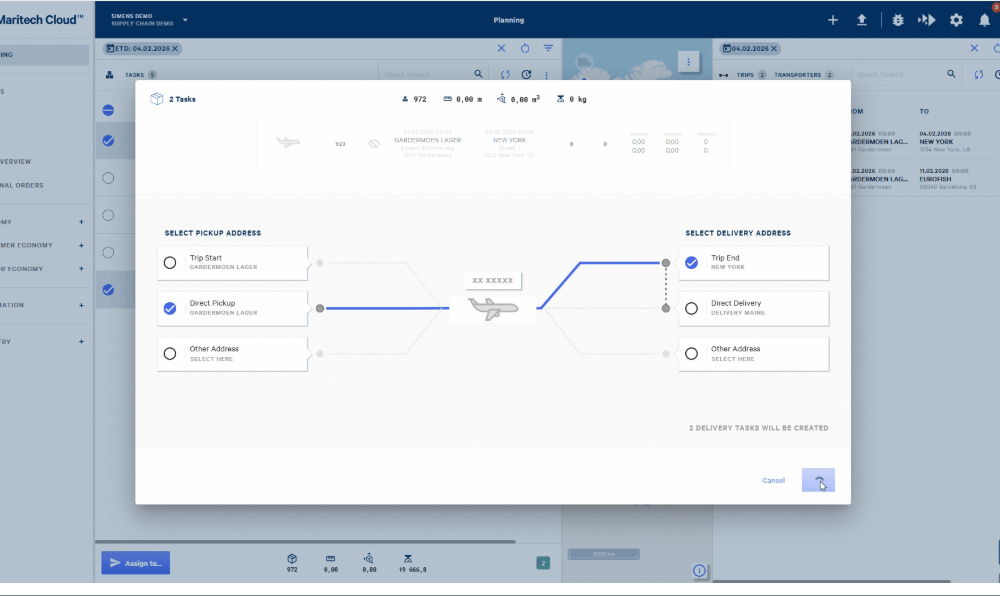
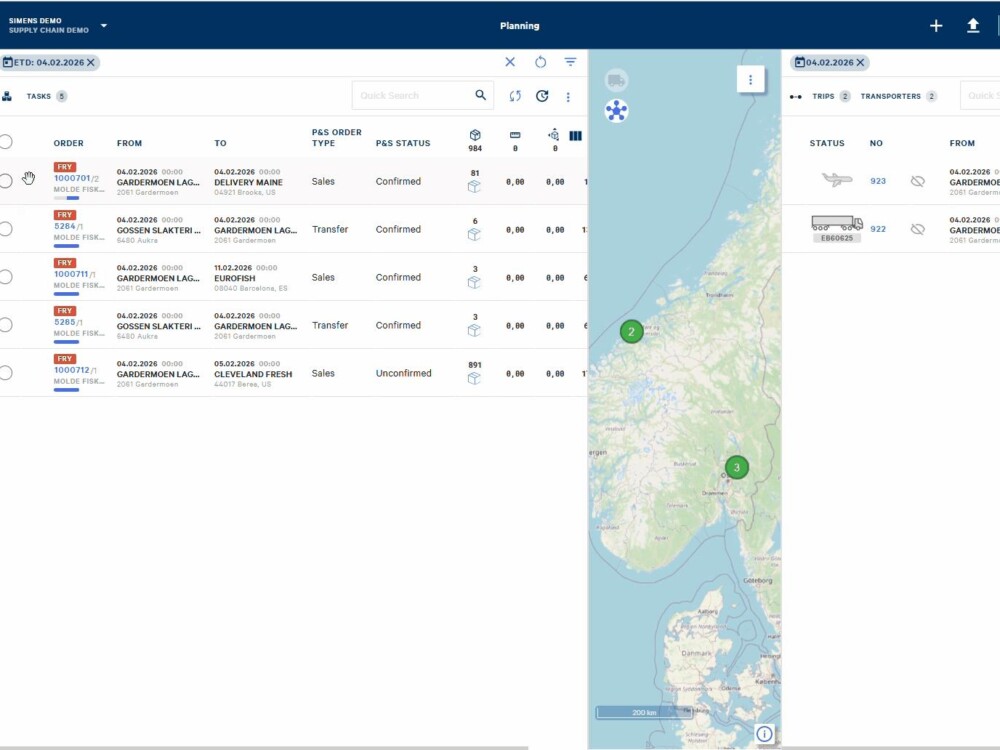
Orders are created in P&S and sent automatically to TMS as a transport job. In TMS, trips are created, and orders are planned onto them – with the option to split an order across multiple legs or distribute it across several trucks. Once planning is complete, TMS sends information back to P&S, including carrier, vehicle number, and costs, which are added directly to the order.
The planning view in TMS gives a full overview of all orders departing on a given day, with trips laid out so orders can simply be dragged onto the right one. What used to require manual updates across multiple spreadsheets now happens in a single, unified view – with cost and carrier information flowing straight back into P&S.
Beyond planning: EDI with carriers
Transport planning also makes it possible to send trip requests or orders to carriers via EDI. This speeds up communication with carriers and reduces the need for manual follow-up.
What’s next: Maritech Transport Portal
We’re now working on the Transport Portal – a solution designed to simplify the logistics value chain and make communication between all involved parties easier. Transport planning is a prerequisite for using it. The portal is still under development and is currently being tested with a pilot customer, and we look forward to sharing more as it takes shape.
At its core, transport planning is about moving the work out of the shared spreadsheet and into a flow that runs automatically between your TMS and your transporters’ portals – freeing up the time you currently spend on manual entry and follow-up so it can go toward the transport itself.