New research: Fish Trading Optimization 

In the joint innovation project FishTraOpt, Maritech, Lerøy Seafood Group, Møreforskning and Molde University College are researching how suppliers of farmed fish can use Machine Learning to optimize their sales and demand forecast and allocation plan.

AI-based decision support

Since 2020, Maritech has been cooperating closely with Møreforskning, Molde University College and Lerøy Seafood Group in the Norwegian Research Council founded project FishTraOpt, developing supply and demand planning tools utilizing AI (Artificial Intelligence) and Maritech’s Analytics BI (Business Intelligence) software for faster and more efficient distribution of fish. The goal is to provide valuable decision support for aquaculture companies when planning and allocating fish to sales orders.

“Aquaculture companies harvest large volumes of fish that vary in grades based on size and quality, and other factors such as Global Gap or other environmental or quality certifications,” says Oddvar Husby, VP Data Science in Maritech.

“The production, allocation and logistics processes are characterized by a high degree of complexity and uncertainty. Fish are sold prior to the fish being harvested. This means that the actual size and quality of the harvest available to sell is not known exactly. The products that will be available to be allocated to sales, are initially based on projected forecasts until the actual harvest details are known.”
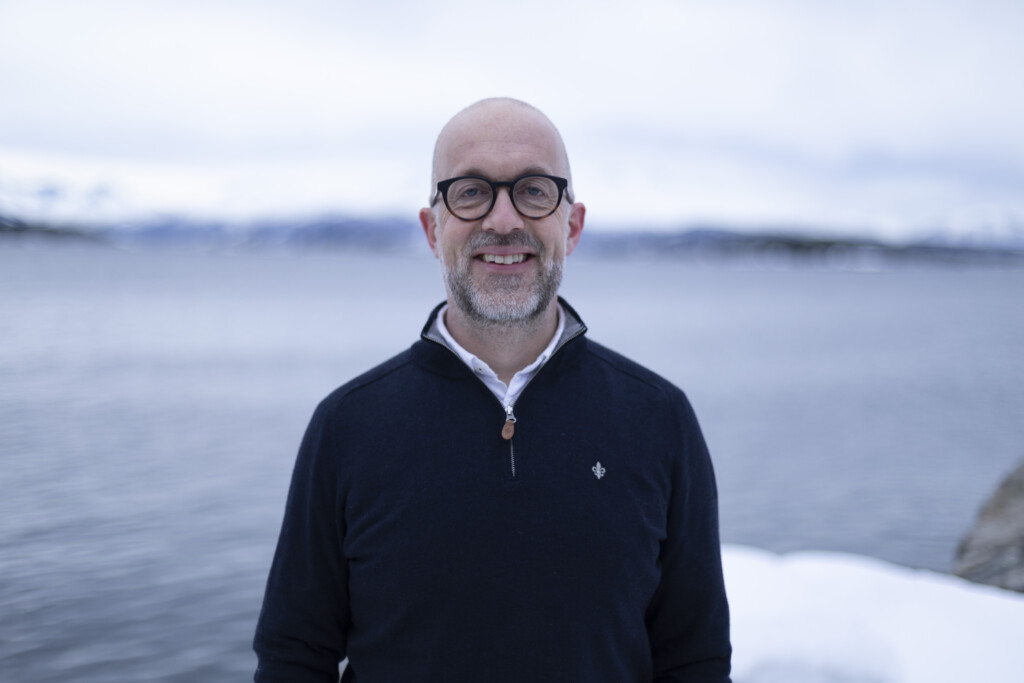
Oddvar Husby - VP Data Science Maritech
Oddvar Husby – VP Data Science Maritech

Complex processes

“In addition to the potential variation in volume and quality of the harvested fish itself, which are supplied from multiple fish farms and regions, there are also multiple customers with a variety of sales agreements, all of whom may have different quality, volume, product form, and contractual requirements that must be met. Logistical shipping and product allocation planning decisions must be made very quickly as the product is fresh and any unforeseen delays can result in quality degradation.

As there is never a perfect match between supply and demand, it is not always possible to deliver to customers exactly what has been sold. Once the harvest figures are known, sales quantity and prices must often be rapidly renegotiated, and the shipping planned for, in a very short time period.”

Are you curious?

We would love to talk to you

  • This field is for validation purposes and should be left unchanged.

A new trading algorithm

“In the FishTraOpt project, we are developing an algorithm for aquaculture suppliers,” Husby says.

“This algorithm considers factors like fish size distribution, fish certification requirements, customer priority ordering, customer flexibility, contractual obligations, sales prices, and transport logistics, and matches available fish to sales demand. It will be included in new software tools for decision support, which will be available for traders of farmed fish.

Today, both matching of supply and demand and selection of transportation alternatives are done manually, which takes a lot of time and can lead to suboptimal solutions. Based on this research, we will soon be able to solve complex optimization problems for which no automated solution procedures currently exist,” Husby concludes.

Higher margins, optimized decisions

Using Machine Learning to propose an optimal sales and demand forecast and allocation plan, suppliers of farmed fish will achieve:

  • Higher margins
  • Increased Revenue
  • Increased efficiency
  • Better and faster decisions
  • Improved ability to adapt to changes
  • Reduced workload for planners and salespeople

New research: Fish Trading Optimization 

In the joint innovation project FishTraOpt, Maritech, Lerøy Seafood Group, Møreforskning and Molde University College are researching how suppliers of farmed fish can use Machine Learning to optimize their sales and demand forecast and allocation plan.


Since May 2021, Konrad has been leading Maritech Iceland, located at Iceland Ocean Cluster in Reykjavik.

For many, he is well-known as an experienced veteran of the seafood industry, as well as a (former) professional handball player, as an Olympian, and at the national team level.


Short response time

“We already have established a strong presence and have received a lot of attention here in Iceland. We experience that many Icelandic seafood companies now are ready to take their next step with regards to digitalization, and are now in close dialogue with most of the seafood industry,” he says. .

“Many people have known about Maritech for decades, and the general response is they find it very positive that we are now really investing here. And when we are geographically present, we have a short response time and can quickly assist if something should occur. This is crucial, especially in land-based farming.”

Konrad Olavsson, Maritech's Sales & Service Manager in Reykjavik

“Icelandic seafood companies were at the forefront of early digitalization and have a tradition of being far ahead of the curve. At the same time, it is now several years since many of the early solutions were adopted. There is now a lot to gain from updating digital infrastructure and adopting new technology and cloud solutions. Today, there are also fewer and larger companies than before – with more locations, spread around Iceland and internationally. This means that one must operate in a different way. We find that many now want to take the next step in digitalization and use modern cloud solutions to operate even more profitably and efficiently in an international context.”


Aquaculture infrastructure

There are great benefits with integrated systems that can provide seamless operations and communications across the entire business spectrum – internally within the company and with other players in the value chain.

“When it comes to farming, the situation is different from the fishery companies, since the industry is so young here in Iceland. As the number of salmon farmers grows rapidly, and they are also steadily increasing in size, a lot of work is now being done to put in place all the infrastructure, processes, and technology needed to support the industry. Massive international investments are being made, especially from Norway. This gives Maritech a unique opportunity to be a total supplier of digital infrastructure to the Icelandic aquaculture industry, for example with IoT and systems for buying and selling seafood.”


Backed by a global team

The Maritech Iceland team is about to grow, and we are now looking for software specialists and technical specialists.

“We look forward to this,” says Konrad, “And we can promise that these are exciting roles. Here you get to take part in a journey where both we and our customers are developing and have high ambitions. I can really recommend working at Maritech. It’s a great culture and group of people – now we’ve become almost 120 people in 6 countries. We collaborate a lot across the borders, so you always have a solid team behind you with a wide range of expertise and experience.

Give us a nudge if you are curious, or you know someone who can fit in with us. We are primarily looking for someone who has experience with seafood processes, but that is not an absolute requirement.”

Konrad also encourages others who are interested to get in touch.

“There is a need for more people and maybe in the long term we can establish a developer team up here as well,” he concludes. “That would be nice!”

Are you curious?

We would love to talk to you

  • This field is for validation purposes and should be left unchanged.

Grieg Seafood

Customer Case – Maritech Cloud

One complete solution from sea to customer

Grieg Seafood today uses Maritech across their entire value chain — from sales and traceability to logistics and transport planning. What began as a collaboration on Purchase & Sales has grown into a complete solution covering trading, processing, logistics, and quality management.

Trading, processing, logistics, quality management

The collaboration began when Grieg Seafood established its integrated sales organization, aiming to streamline all trading-related processes with modern, cloud-based tools. Maritech Purchase & Sales gives full company overview, with traceability and control throughout the value chain — built on industry best practices and delivered as a SaaS solution in Maritech Cloud on Microsoft Azure.

Technology is a decisive factor for Grieg Seafood in reducing their environmental footprint while ensuring profitable growth.

Grieg Seafood has been a key contributor to the further development of Maritech’s digital systems and services. The shared goal is for employees to work holistically within a single platform to operate the sales and value chain, from packaging to delivery. The unwavering focus is safe food with full traceability, in a sustainable business model for everyone involved.

From Timpex to Maritech Transport Planning

When Grieg Seafood launched its new sales organization, they simultaneously took on their logistics operations. As the need for system support arose before Maritech Cloud was ready to cover these processes, they used Timpex TMS as a temporary solution for a period. Following an implementation phase, Grieg went live with Maritech Transport Planning.

We spoke with Terje Larssen, Supply Chain Logistics Manager at Grieg Seafood, about the challenges in seafood logistics and the road to today’s solution.

Terje, could you tell us a bit about the challenges in seafood logistics and how they led to the need for a new business system?

Terje: “One of the main challenges everyone in our field deals with is the gap between what we anticipate and what actually occurs in our operations. We rarely have all the information about the actual orders until 1-2 days before the transport, which has to be booked several days ahead. At the same time, you have to handle changes all the time — there can be many changes per order. And each change leads to others, in terms of transport bookings, customer communications, and allocation.  This uncertainty demands a robust business system, particularly for managing our transport operations effectively. Furthermore, ensuring smooth data flow between our sales system and logistics operations is crucial, which is why we chose Maritech Transport Planning.  The key lies in maintaining flexibility, especially when handling forecasts, changes, and other variables. Now we can also start ordering capacity rather than specific orders, which allows us to adapt even more seamlessly.”

Could you walk us through the journey of implementing the new system with Maritech?

Terje: “We began exploring the possibility some time ago. Initially, there was a process of pitching our vision and discussing the scope of the project. Maritech proposed starting with Timpex TMS, which proved to be a sensible approach. After a period using this system as our temporary solution, we have now left it behind and completed the first step in our transition to fully cloud-based supply chain management. The project started with an initial phase where we mapped needs and exchanged experience with other systems. The goal was to reveal the best from all perspectives. Now, with the go-live after phase one, much is in place. The Maritech project team has done a very good job so far.”

How do you envision the impact of this new system on your operations moving forward?

Terje: “With the new system, we aim to simplify and streamline our logistics operations, ultimately improving efficiency and control. We anticipate significant benefits in terms of enhanced visibility, better decision-making, and ultimately, a more seamless customer experience.  After the next two project phases, I believe we will have reached the result we are aiming for — a setup where everything runs seamlessly between Maritech Purchase & Sales and our transport management in Maritech Transport Planning. The future-proof and scalable way to manage our seafood logistics.”

Learn more about Transport Planning

Read more about how Grieg Seafood uses our Nasdaq Benchmarking Report

About Grieg Seafood

Grieg Seafood is a global leader in salmon farming, targeting a harvest of 120,000 to 135,000 tonnes by 2026. Their farms are located in Rogaland and Finnmark in Norway, and in British Columbia and Newfoundland in Canada. Grieg Seafood is committed to sustainable farming practices, ensuring minimal environmental impact and optimal fish welfare. As they grow towards 2026, they aim to enhance cost efficiency and evolve from being a pure salmon supplier to an innovation partner for select customers.

Grieg Seafood

Mowi choose
Maritech Eye™ 

We are pleased to announce that Mowi Consumer Products UK has implemented Maritech Eye™ to further enhance the quality assessment of their Mowi brand smoked salmon.  


Automated, objective quality control and documentation

Beginning in 2018, Mowi, Maritech, and Nofima have cooperated in a joint innovation project to develop a technology for real-time quality scanning of salmon fillets at industrial speed. The project was successful, and Maritech Eye™ was launched for redfish at Aqua Nor in August 2021.

Maritech Eye™ advanced algorithms and hyperspectral camera solution detects and documents blemishes within the fillets and the size location of these quality challenges. This quality assessment method is the only one of its kind in the world, it is done at industrial speed, and live data is provided to operators and management.

After the end of the innovation project, Mowi Consumer Products UK and Maritech co-operated closely in a short pilot period to establish the quality criteria and make the necessary adjustments to integrate Maritech Eye™ within the production environment.

“For our business here in the UK and in particular the Mowi brand, this gives us the ability to pre-select fillets based on a specification to reduce the manual intervention of removing blemishes once the fillets have been sliced. Furthermore, sorting by quality and providing objective information gives us the ability to allocate the material accordingly and allows us to utilise our resources more efficiently and effectively” says Gary Paterson, Head of Operations, Mowi CP UK.

Ready for the global market

“Mowi is one of the most innovative seafood companies in the global seafood industry, and we are proud that they chose Maritech Eye™” says Per Alfred Holte, VP Technical Solutions in Maritech.

“Mowi Consumer Products UK is one of three international Maritech Eye™ redfish projects this fall, and we are impressed by how the Mowi team has handled the development and implementation in a period when it still has been difficult to travel due to Covid 19. Our team has only been at the site in Scotland once this year since the initial physical installation of the equipment.”

“Together we have proved that most of the optimization and implementation process can be done remotely and that Maritech Eye™ is ready for the global seafood industry, even during a pandemic.”

Would you like to know more?

We would love to talk to you.

  • This field is for validation purposes and should be left unchanged.

New research: Fish Trading Optimization 

In the joint innovation project FishTraOpt, Maritech, Lerøy Seafood Group, Møreforskning and Molde University College are researching how suppliers of farmed fish can use Machine Learning to optimize their sales and demand forecast and allocation plan.

AI-based decision support

Since 2020, Maritech has been cooperating closely with Møreforskning, Molde University College and Lerøy Seafood Group in the Norwegian Research Council founded project FishTraOpt, developing supply and demand planning tools utilizing AI (Artificial Intelligence) and Maritech’s Analytics BI (Business Intelligence) software for faster and more efficient distribution of fish. The goal is to provide valuable decision support for aquaculture companies when planning and allocating fish to sales orders.

“Aquaculture companies harvest large volumes of fish that vary in grades based on size and quality, and other factors such as Global Gap or other environmental or quality certifications,” says Oddvar Husby, VP Data Science in Maritech.

“The production, allocation and logistics processes are characterized by a high degree of complexity and uncertainty. Fish are sold prior to the fish being harvested. This means that the actual size and quality of the harvest available to sell is not known exactly. The products that will be available to be allocated to sales, are initially based on projected forecasts until the actual harvest details are known.”

Are you curious?

We would love to talk to you

  • This field is for validation purposes and should be left unchanged.

New research: Fish Trading Optimization 

In the joint innovation project FishTraOpt, Maritech, Lerøy Seafood Group, Møreforskning and Molde University College are researching how suppliers of farmed fish can use Machine Learning to optimize their sales and demand forecast and allocation plan.

AI-based decision support

Since 2020, Maritech has been cooperating closely with Møreforskning, Molde University College and Lerøy Seafood Group in the Norwegian Research Council founded project FishTraOpt, developing supply and demand planning tools utilizing AI (Artificial Intelligence) and Maritech’s Analytics BI (Business Intelligence) software for faster and more efficient distribution of fish. The goal is to provide valuable decision support for aquaculture companies when planning and allocating fish to sales orders.

“Aquaculture companies harvest large volumes of fish that vary in grades based on size and quality, and other factors such as Global Gap or other environmental or quality certifications,” says Oddvar Husby, VP Data Science in Maritech.

“The production, allocation and logistics processes are characterized by a high degree of complexity and uncertainty. Fish are sold prior to the fish being harvested. This means that the actual size and quality of the harvest available to sell is not known exactly. The products that will be available to be allocated to sales, are initially based on projected forecasts until the actual harvest details are known.”

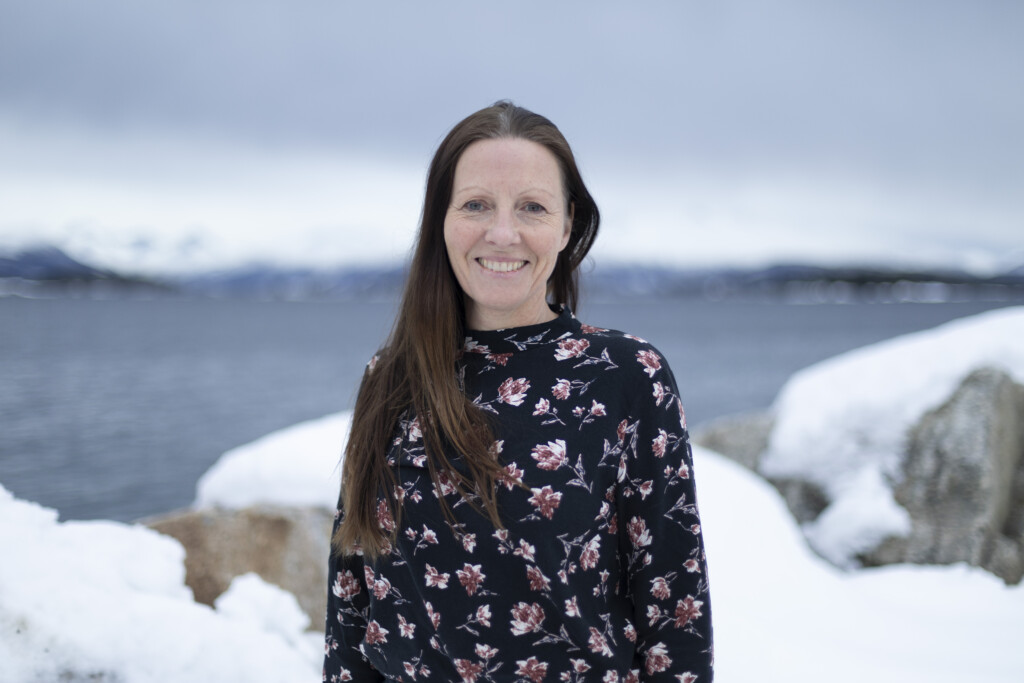
Hildegunn Trondsen, Manager Development Team at Maritech.

Complex processes

“In addition to the potential variation in volume and quality of the harvested fish itself, which are supplied from multiple fish farms and regions, there are also multiple customers with a variety of sales agreements, all of whom may have different quality, volume, product form, and contractual requirements that must be met. Logistical shipping and product allocation planning decisions must be made very quickly as the product is fresh and any unforeseen delays can result in quality degradation.

As there is never a perfect match between supply and demand, it is not always possible to deliver to customers exactly what has been sold. Once the harvest figures are known, sales quantity and prices must often be rapidly renegotiated, and the shipping planned for, in a very short time period.”

Higher margins, optimized decisions

Using Machine Learning to propose an optimal sales and demand forecast and allocation plan, suppliers of farmed fish will achieve:

  • Higher margins
  • Increased Revenue
  • Increased efficiency
  • Better and faster decisions
  • Improved ability to adapt to changes
  • Reduced workload for planners and salespeople
Maritech is now building all new software in Microsoft Azure, where our solutions are delivered as Software as a Service (SaaS); subscription-based services – in our self-developed cloud platform DigitalSeafood.

“We always choose to use the latest technology and will always be at the forefront – best-of-breed, both in terms of functionality and user-friendliness. Microsoft Azure gives us the opportunities, flexibility and security we need to be at the top of the world and means that customers get the maximum benefit from choosing a cloud solution from us,” says Bjørnar Kvalsnes.

“Through Azure, we can use advanced Microsoft tools in the development of our own software, and we use Microsoft’s infrastructure and expertise to operate and deliver our solutions to customers worldwide. It is easy to scale the number of users and capacity up / down as needed, we can guarantee the uptime – and most importantly, very high security. Every year, Microsoft spends 1 billion dollars on investments in security, it illustrates how much stronger we are with such a solid partner.”

It is not only internally at Maritech that the team is praised. This autumn, an external consulting company conducted an evaluation of the architecture, the department and the methodology. The conclusion was very positive.

“They stated that we are a top tier team, and they were impressed by the work that has been done,” Kvalsnes concludes. “A great recognition of a very talented team and the effort that is put in every single day.”

Are you curious?

We would love to talk to you

  • This field is for validation purposes and should be left unchanged.

New research: Fish Trading Optimization 

In the joint innovation project FishTraOpt, Maritech, Lerøy Seafood Group, Møreforskning and Molde University College are researching how suppliers of farmed fish can use Machine Learning to optimize their sales and demand forecast and allocation plan.

AI-based decision support

Since 2020, Maritech has been cooperating closely with Møreforskning, Molde University College and Lerøy Seafood Group in the Norwegian Research Council founded project FishTraOpt, developing supply and demand planning tools utilizing AI (Artificial Intelligence) and Maritech’s Analytics BI (Business Intelligence) software for faster and more efficient distribution of fish. The goal is to provide valuable decision support for aquaculture companies when planning and allocating fish to sales orders.

“Aquaculture companies harvest large volumes of fish that vary in grades based on size and quality, and other factors such as Global Gap or other environmental or quality certifications,” says Oddvar Husby, VP Data Science in Maritech.

“The production, allocation and logistics processes are characterized by a high degree of complexity and uncertainty. Fish are sold prior to the fish being harvested. This means that the actual size and quality of the harvest available to sell is not known exactly. The products that will be available to be allocated to sales, are initially based on projected forecasts until the actual harvest details are known.”

Are you curious?

We would love to talk to you

  • This field is for validation purposes and should be left unchanged.

“This is a strategic choice for us,” says Dag Tarberg, Director Agencies & Landbased Services at Sea-Cargo. “We see that our customers appreciate having a “one stop shop service” from Sea Cargo, and we now see an increased demand to provide transport solutions, not only where we can provide the transports on our own vessels, but also world-wide shipments. To accommodate this in the most efficient way, we need software that fully support this function. After a careful evaluation we have found that a partnership with Maritech is the right way to go for us.”

“Maritech gives us best-of-breed software, valuable integrations and trusted advisors who have cooperated closely with the best logistics companies for decades. Their focus goes beyond technology, emphasizing a holistic approach and smooth processes as a key to success. We want to work as smart as possible, according to best practice. This was the main reason we chose Timpex solutions and Team Maritech. We are confident that what we get and learn will strengthen our organization, our operations and our profitability.”

Innovation and sustainability

“We are proud that Sea-Cargo chose us as their new partner,” says Ove Gjelstenli, Sales Director, Logistics Maritech.

“They are a forward-leaning organization with a true growth mindset, and curiosity, grit and openness in their backbone. We are especially impressed by their creativity and power to innovate within the field of sustainability. A prime example is the new roro vessel project, where hybrid technology and two large rotor sails are estimated to give a 25 % reduction in fuel consumption and CO2 emissions per year.

We can all learn something from this way of thinking, and it says a lot about the milestones Sea-Cargo can reach in the future. They focus on potential, rather than what may be holding them back. We are looking forward to being a part of the Sea-Cargo journey.”

Ove Gjelstenli, Maritech

New research: Fish Trading Optimization 

In the joint innovation project FishTraOpt, Maritech, Lerøy Seafood Group, Møreforskning and Molde University College are researching how suppliers of farmed fish can use Machine Learning to optimize their sales and demand forecast and allocation plan.

AI-based decision support

Since 2020, Maritech has been cooperating closely with Møreforskning, Molde University College and Lerøy Seafood Group in the Norwegian Research Council founded project FishTraOpt, developing supply and demand planning tools utilizing AI (Artificial Intelligence) and Maritech’s Analytics BI (Business Intelligence) software for faster and more efficient distribution of fish. The goal is to provide valuable decision support for aquaculture companies when planning and allocating fish to sales orders.

“Aquaculture companies harvest large volumes of fish that vary in grades based on size and quality, and other factors such as Global Gap or other environmental or quality certifications,” says Oddvar Husby, VP Data Science in Maritech.

“The production, allocation and logistics processes are characterized by a high degree of complexity and uncertainty. Fish are sold prior to the fish being harvested. This means that the actual size and quality of the harvest available to sell is not known exactly. The products that will be available to be allocated to sales, are initially based on projected forecasts until the actual harvest details are known.”

Are you curious?

We would love to talk to you

  • This field is for validation purposes and should be left unchanged.

Strategic acquisition

“From the start, we have seen Sea Data Center as a very interesting company with competence and insights we would like to continue building on,” says Maritech CFO, Thomas Brevik.

“Data Science is one of Maritech’s most important focus areas and has, for several years, been one of the top technology trends in the world, across all industries and geographies. The acquisition of Sea Data Center is an important strategic choice for us, that will strengthen our offering and make us a unique provider of seafood insights.”

New research: Fish Trading Optimization 

In the joint innovation project FishTraOpt, Maritech, Lerøy Seafood Group, Møreforskning and Molde University College are researching how suppliers of farmed fish can use Machine Learning to optimize their sales and demand forecast and allocation plan.

AI-based decision support

Since 2020, Maritech has been cooperating closely with Møreforskning, Molde University College and Lerøy Seafood Group in the Norwegian Research Council founded project FishTraOpt, developing supply and demand planning tools utilizing AI (Artificial Intelligence) and Maritech’s Analytics BI (Business Intelligence) software for faster and more efficient distribution of fish. The goal is to provide valuable decision support for aquaculture companies when planning and allocating fish to sales orders.

“Aquaculture companies harvest large volumes of fish that vary in grades based on size and quality, and other factors such as Global Gap or other environmental or quality certifications,” says Oddvar Husby, VP Data Science in Maritech.

“The production, allocation and logistics processes are characterized by a high degree of complexity and uncertainty. Fish are sold prior to the fish being harvested. This means that the actual size and quality of the harvest available to sell is not known exactly. The products that will be available to be allocated to sales, are initially based on projected forecasts until the actual harvest details are known.”

Are you curious?

We would love to talk to you

  • This field is for validation purposes and should be left unchanged.

Timpex CMS can be used standalone or together with Maritech’s ERP software. But you will clearly get the greatest efficiency from using these systems in a combination.

The system is developed in close collaboration with customers and the team quickly corrects problems or finds alternative and better solutions when needed.

“We aim to be at the forefront of new rules and guidelines from the customs service and to adjust solutions and inform our customers as soon as possible. There are continuous changes from the customs service that the customs system must be adapted to”, says Gjelstenli.