Production scheduling built for seafood processors

News! Production Scheduling built for seafood processors

CAI Software, the company behind Maritech, has acquired PlanetTogether, an Advanced Planning and Scheduling platform used by processors and manufacturers to build production schedules that account for real constraints: machine capacity, labor, materials, and sequence-dependent changeovers.

For a seafood processor, that means a schedule that already knows your species mix, your changeover requirements between runs, and your plant capacity, instead of a plan that gets rebuilt by hand every time volume shifts or a load comes in late.

What this looks like in practice for a plant like yours

  • Production schedules that adjust automatically when catch volume or species mix changes
  • Changeover and cleaning requirements built into the plan, not managed on a whiteboard
  • Visibility across multiple plants if you run more than one facility
  • A plan your team can rerun in seconds when a rush order or a late delivery hits, instead of losing an afternoon to rescheduling

“Scheduling now takes about 15 minutes. PlanetTogether paid for itself in six months.”

— Dick Marx, Materials Manager, Knapheide Truck Equipment


Maritech already gives you traceability and catch-weight accuracy. PlanetTogether adds the planning layer on top, so the schedule that drives your floor is built around your actual constraints, not a spreadsheet.

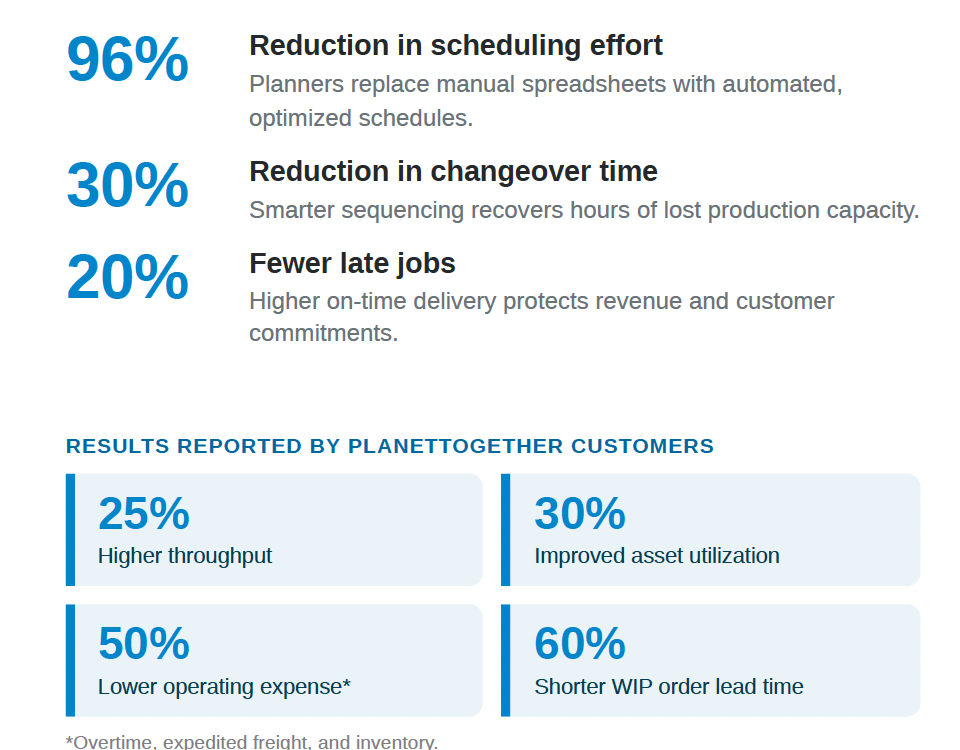
Food production customers running PlanetTogether have seen schedule accuracy improve by up to 90% and production output grow by up to 25%. That’s the gap between planning on a guess and planning on a live picture of the floor.


Worth a look?

If you want to see what this would look like for your plant specifically, let us know here.


Transport Planning: from spreadsheets to an automated flow

Getting the fish from A to B is one of the most critical and time-consuming tasks for anyone working in seafood logistics.

Well-planned transport is essential – and that’s exactly what transport planning is about. 

The familiar spreadsheet 

Most people working with transport planning recognize the situation: a spreadsheet or Google Sheet per carrier, where orders are entered manually and information from the carrier is added afterwards. It works, but it takes time – and manual entry and re-entry also means a higher risk of human error, from typos to information simply falling through the cracks. 

With transport planning, you can streamline large parts of this work. Not necessarily eliminate the spreadsheet overnight but automate a significant share of the job – and eventually get rid of it altogether. 


What is Maritech Transport Planning? 

In short, transport planning connects Purchase & Sales (P&S) with Maritech TMS, the transport module in Maritech Cloud built for carriers, where parts of the functionality are also available to you as transport buyers. 

The flow works like this: 

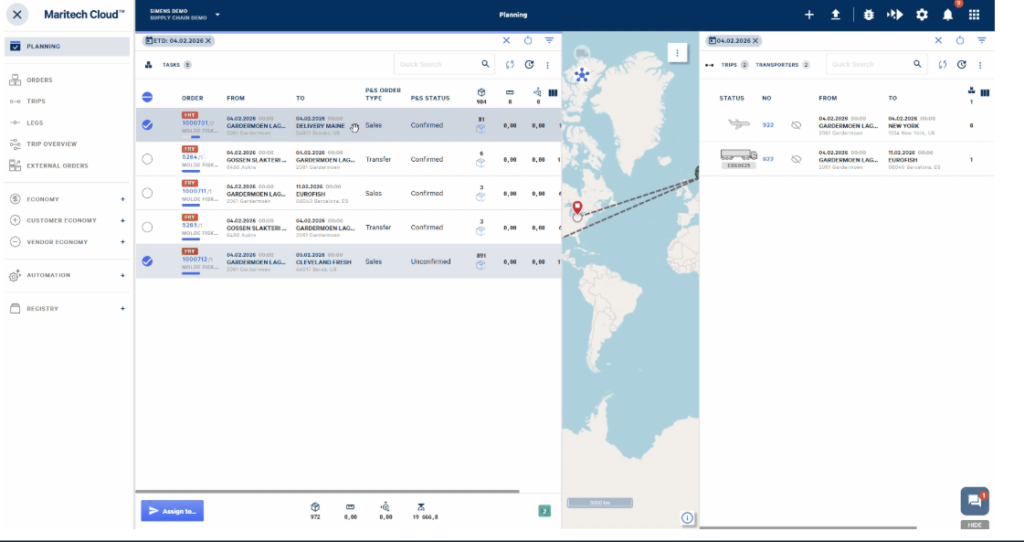
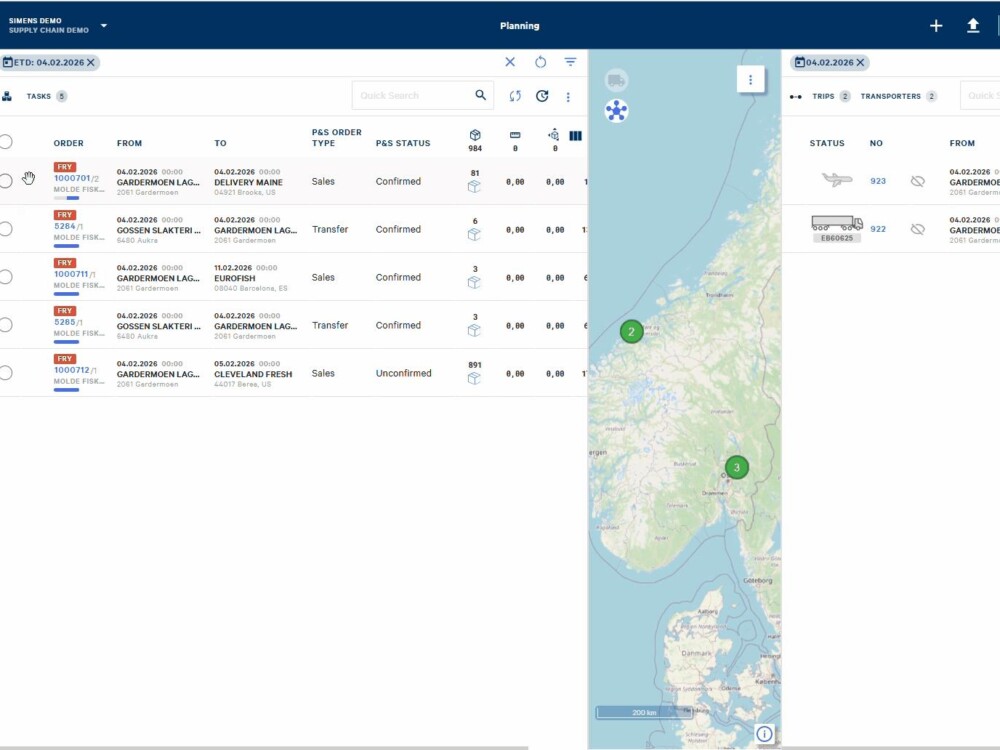
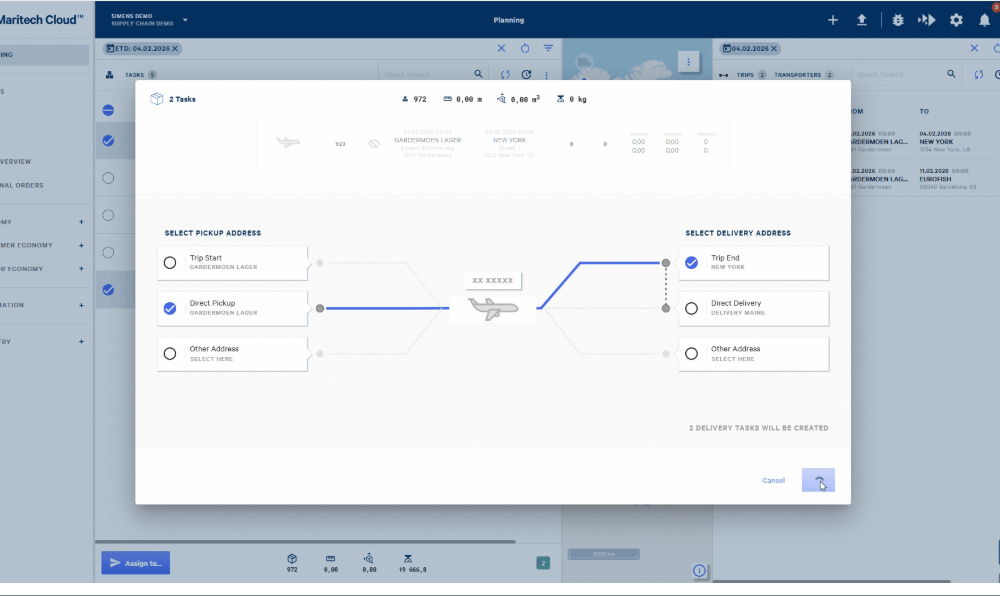
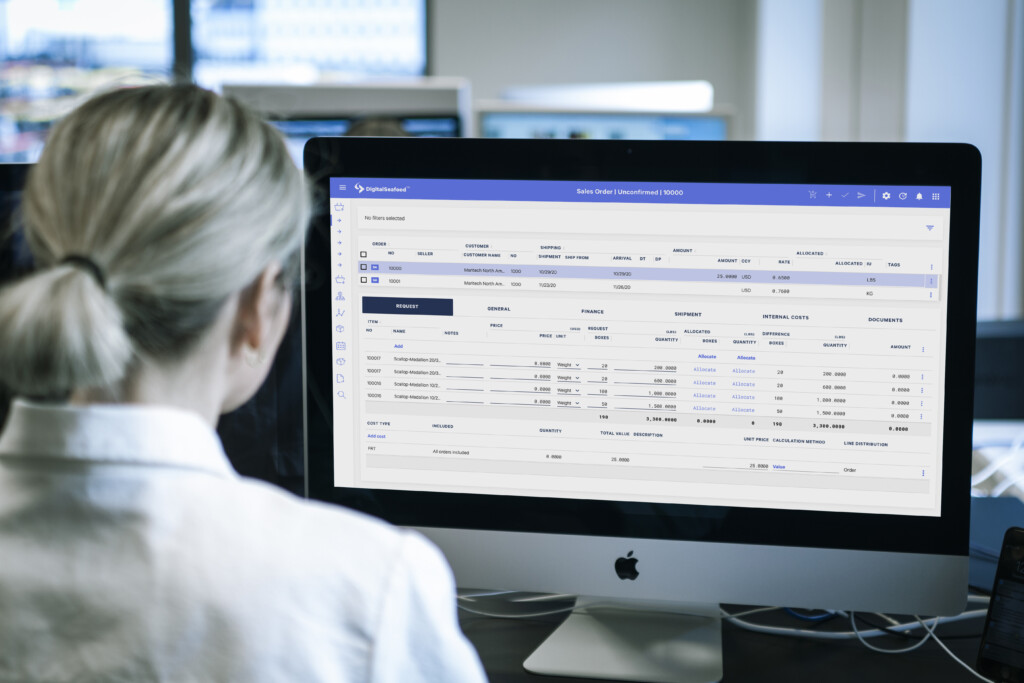
Orders are created in P&S and sent automatically to TMS as a transport job. In TMS, trips are created, and orders are planned onto them – with the option to split an order across multiple legs or distribute it across several trucks. Once planning is complete, TMS sends information back to P&S, including carrier, vehicle number, and costs, which are added directly to the order. 

The planning view in TMS gives a full overview of all orders departing on a given day, with trips laid out so orders can simply be dragged onto the right one. What used to require manual updates across multiple spreadsheets now happens in a single, unified view – with cost and carrier information flowing straight back into P&S. 

Beyond planning: EDI with carriers 

Transport planning also makes it possible to send trip requests or orders to carriers via EDI. This speeds up communication with carriers and reduces the need for manual follow-up. 

What’s next: Maritech Transport Portal 

We’re now working on the Transport Portal – a solution designed to simplify the logistics value chain and make communication between all involved parties easier. Transport planning is a prerequisite for using it. The portal is still under development and is currently being tested with a pilot customer, and we look forward to sharing more as it takes shape. 

At its core, transport planning is about moving the work out of the shared spreadsheet and into a flow that runs automatically between your TMS and your transporters’ portals – freeing up the time you currently spend on manual entry and follow-up so it can go toward the transport itself.

50 Years of Maritech: From a basement in Averøya to the world 

From a basement in Averøya to the world

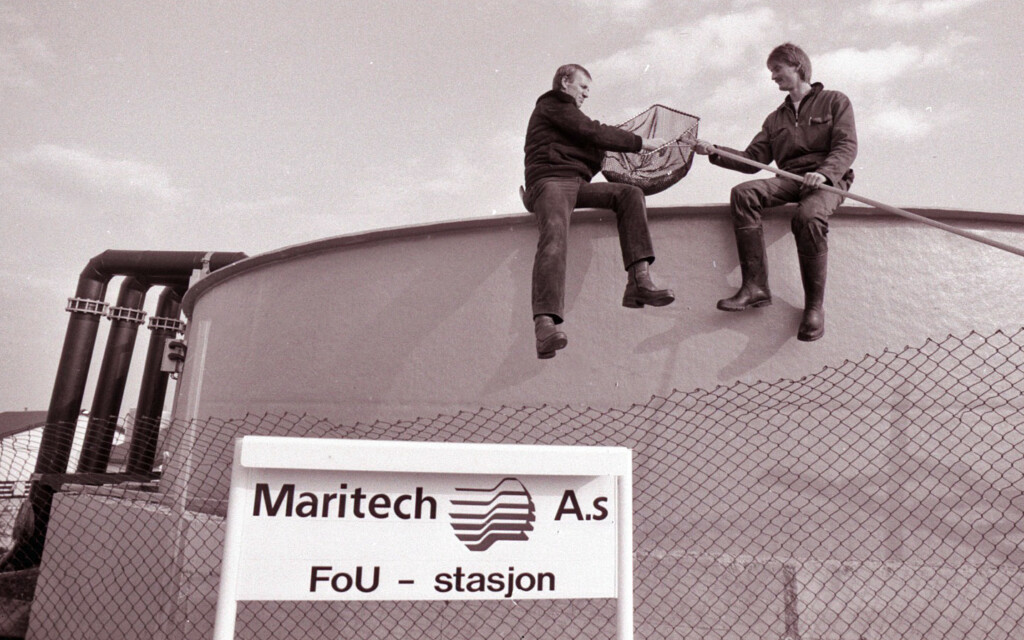
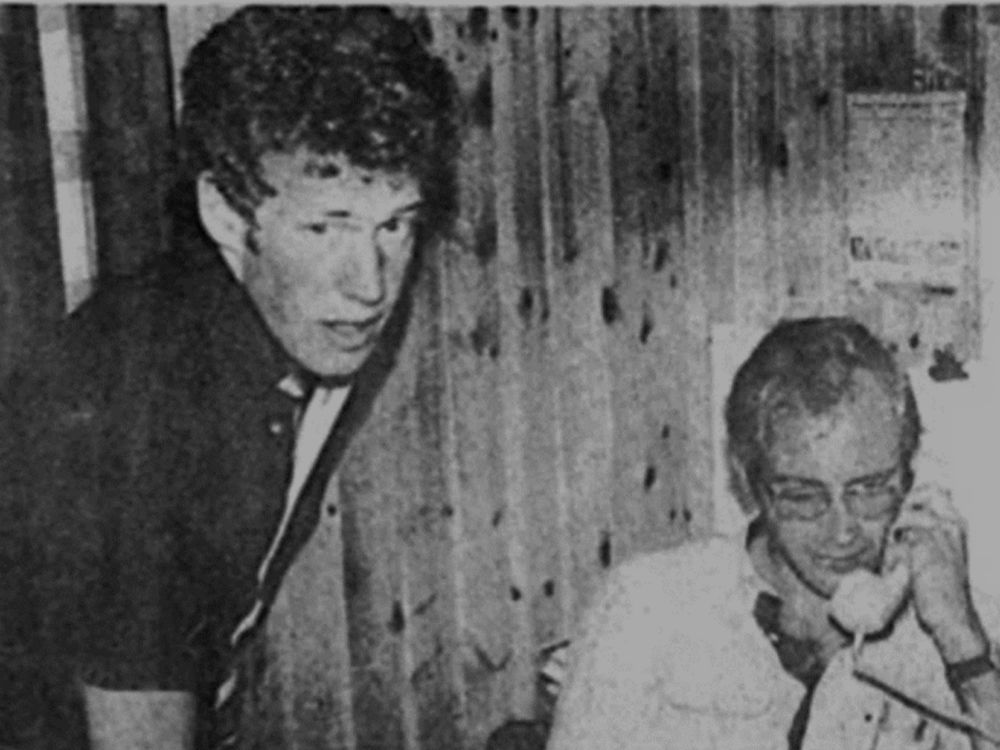
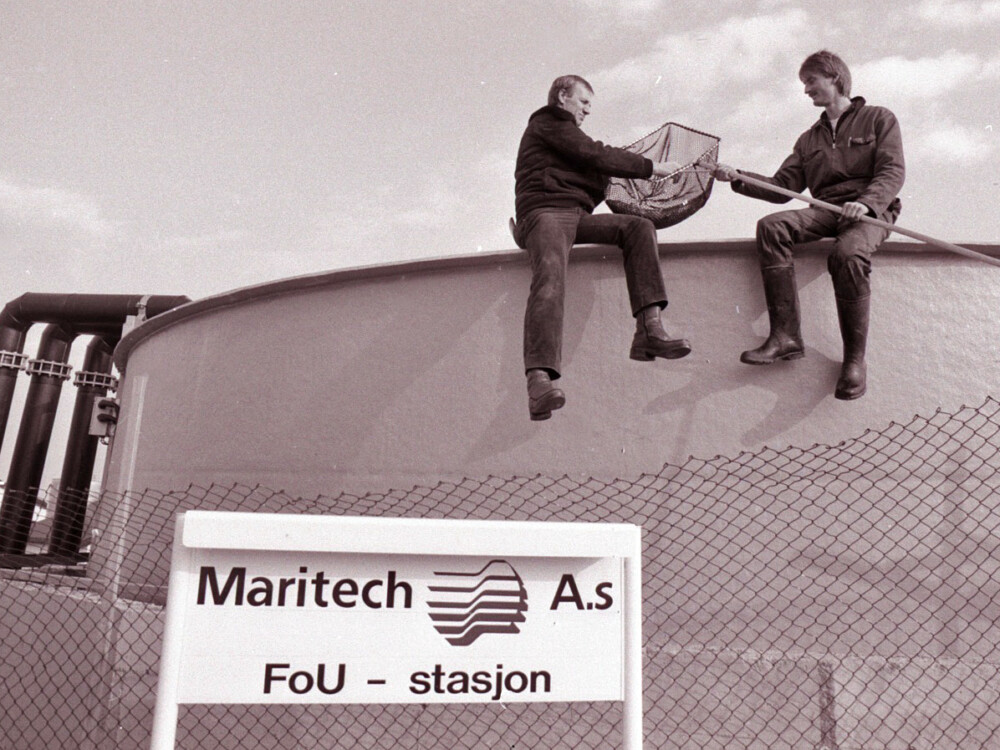
Maritech started in a basement in Averøya with a dream of going global. Fifty years later, that dream has taken us from the Norwegian coast to seafood and logistics companies around the world.

Here’s the story of how we got here — and where we’re headed next.

50 years of dedication

Since the 1970s, we’ve built solutions that support our customers across their entire value chain. From day one, Maritech focused on the seafood industry — and today we’re the leading provider of seafood ERP SaaS software, trusted by many of the biggest names in the global market.

Our 2019 acquisition of Timpex brought deep logistics expertise into the company — now a core focus, both within and beyond seafood.


Built by us, supported by us

We’re a bunch of nerds who love building smooth, reliable solutions — if there’s a missing link, we’ll find it.

Our development team, based in Molde builds every new solution as multi-tenant SaaS on our cloud platform, Maritech Cloud. We build on Microsoft Azure, which gives our customers the flexibility and security they need.

Once you’re a customer, that same team is who you’ll work with. Maritech remains the only authorized provider of maintenance and support for Maritech Cloud, Timpex, and Linsight — handled directly from Norway, by our own people. Going straight to us for service, upgrades, or technical support means continuity, security, and full access to the resources and expertise behind the products; no one else delivers maintenance or support for these platforms on Maritech’s behalf.

We also encourage you to rethink your processes when you upgrade with us, so you get more out of the system. And of course — we’re always here, whether that means support or your next big idea.

Fifty years of trust in the Nordics — and what’s next

Since day one, Maritech has been the seafood and logistics industry’s preferred technology partner in the Nordics, with deep industry knowledge and long customer relationships across Norway and Europe. That local expertise, technical depth, and customer closeness is exactly what made Maritech attractive to CAI Software when it acquired us in 2024 — and it’s still the foundation for our global ambitions today.

The past two years have been about integration: merging operations, building shared commercial solutions, and developing our products together with the customers who use them every day. That work is now paying off. Backed by CAI Software and its owner, STG Partners, we’re investing in more people and AI-driven cloud infrastructure to support seafood, logistics, and custom enterprise customers in every region we serve — and to speed up the cloud migration for Timpex customers.

We’re building dedicated teams in North America and Asia-Pacific — hiring in sales, customer success, professional services, technical development, and support, so customers in those markets get the same responsive, competent service that’s defined Maritech in the Nordics for 50 years.

None of this changes anything for existing customers: support, contacts, and our Molde headquarters stay exactly as they are.

Molde stays the heart of Maritech — home to our commercial, product, technical development, professional services, support, and admin teams, and the place the rest of our global organization draws expertise from as we grow internationally.

“When CAI acquired Maritech, we made a promise to our customers and our team: that we’d make the company stronger, more capable, and more relevant globally — without losing what makes Maritech unique. Two years later, we’re delivering on that promise. Expanding our global team is the next chapter in Maritech’s story, and we’re proud to write it from Molde.”

—Elizabeth Schillo, Chief Commercial Officer, CAI Software

Fifty years in Norway is the foundation we’re building a global company on.

Want to be part of the next 50 years? Get in touch here.

The staffing problem nobody in seafood wants to talk about

How European seafood producers can use factory intelligence to do more with the teams they already have

The real squeeze isn’t margins. It’s people.

Factory intelligence is changing how seafood production facilities operate — not by replacing people, but by helping the teams already on the floor work smarter. Here’s what that looks like in practice.

Rising energy costs and retailer pressure get most of the attention. But talk to operations managers across the UK, Norway, and the Netherlands, and a different concern keeps coming up: they can’t find the people they need, and the ones they have are stretched thin.

Finding and keeping skilled process operators, engineers, and production managers is structurally harder than it was five years ago. Labour costs are up. Turnover is high. And when an experienced operator leaves, the institutional knowledge they carry — the feel for when a cooling unit is about to fail, the shortcut that keeps line two running — takes years to rebuild.

Technology doesn’t solve that problem. But it can change the equation.

What a connected factory actually means

“Smart factory” has become one of those phrases that means everything and nothing. So here’s a more useful question: what happens when your equipment can tell you what’s wrong before you notice it yourself?

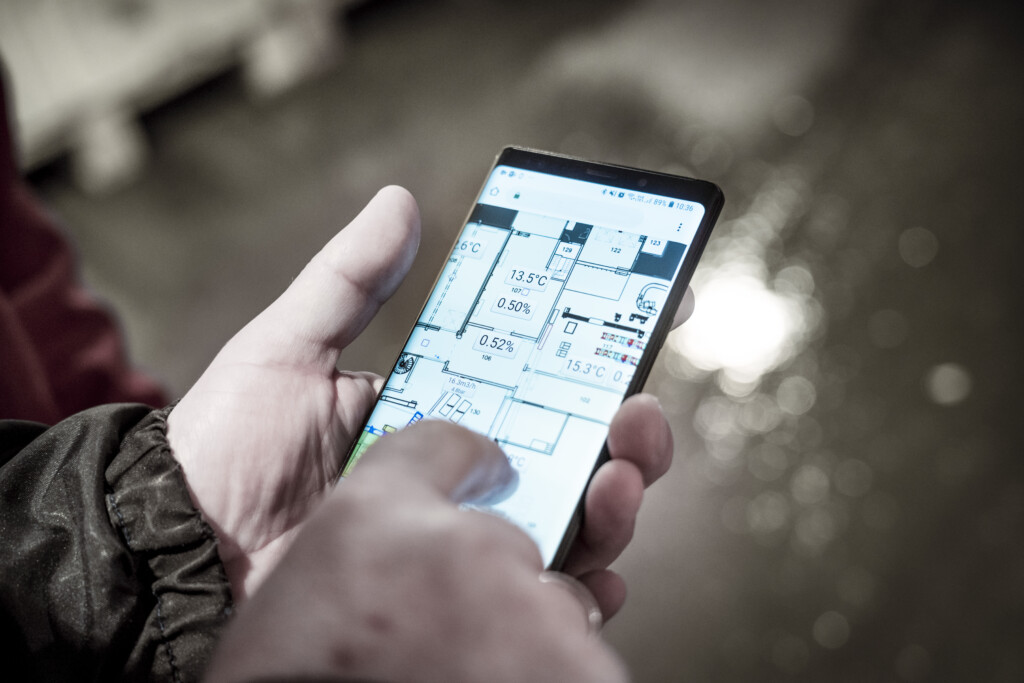
That’s the practical starting point for Maritech Linsight — an operational control and insight platform that connects the equipment already running in your facility. Cooling systems, HVAC, grading lines, sensors. Instead of operators manually checking readings and logging data on paper, deviations surface automatically. Alarms reach the right person on whatever device they’re carrying — on the floor, in the office, or at home.

The shift is less dramatic than the word “smart” implies. You’re not replacing your team. You’re removing the parts of their day that don’t require human judgement — manual data collection, routine checks, chasing down information that should already be in one place — so they can focus on the parts that do.

What you’re replacing

Most European seafood facilities still run on a patchwork: manual logs, isolated PLC systems, and spreadsheets that don’t talk to each other. The information exists — it’s just scattered, delayed, and dependent on someone remembering to write it down.

Linsight replaces that patchwork with a single view of your facility. Production data feeds directly into planning and sales orders. Traceability runs end-to-end across the value chain. And when something goes wrong, you find out from the system — not because someone noticed a problem on the floor.

That last point matters more than it sounds. In a facility running on thin staffing, the difference between catching a deviation early and catching it late can be the difference between a minor correction and a costly shutdown.

You don’t have to start big

The most common hesitation we hear: what does implementation actually look like?

Linsight is modular and hardware-independent. You can start with one production area, one process, one set of sensors — and expand from there. Many customers begin with monitoring only, establishing visibility before layering in control and integration. The investment scales with your starting point. The value starts from day one.

This is not a big-bang replacement of your existing infrastructure. It’s a layer that connects what you already have.

Explore what Linisght can do with your business here.

The producers investing now will set the standard

Labour markets in European seafood are not going to loosen. Retailer traceability requirements are not going to simplify. The producers who build operational intelligence into their facilities now will find it easier to meet those demands — and harder for competitors to match them.

Every factory is different. If you want to understand what modernisation could look like for yours — whether you’re planning a new build or working with an existing plant — we’re happy to start with a conversation.

Get in touch here.

 

ISO 27001: A Mark of Quality in Information Security

Maritech has always kept security high on the agenda – and now it is formally documented. The ISO 27001 certification confirms that we work systematically to protect both our own and our customers’ data, providing added assurance that information is handled securely.

Protecting data is about more than technology – it requires culture, structure, and continuous improvement. ISO/IEC 27001:2023 is the internationally recognized standard for information security, offering a clear framework for how organizations should safeguard the confidentiality, integrity, and availability of all information.

The certification reinforces what has long been part of Maritech’s daily operations.

– We have had a strong focus on security for many years. This certification validates the work we have done and serves as a mark of quality for us and our customers, says Thomas Brevik, Interim CEO at Maritech.

ISO 27001 is not only about technical measures; it also involves people, processes, and risk management. For Maritech, it means that the entire chain of information security – from internal routines to the handling of customer data – follows a documented and verifiable system.

– For our customers, the certification provides added confidence. We adhere to recognized standards and work continuously to improve, both technically and organizationally, says Robert Veiset, IT and Operations Manager at Maritech.

The certification also provides clear advantages in supply chains and procurement processes, where security requirements are often part of the evaluation criteria. ISO 27001 demonstrates that Maritech meets these expectations.

Robert Veiset Thomas Brevik

– In a time of increasing digital risk, it is important for customers to know that we take security seriously. ISO 27001 confirms exactly that, Brevik adds.

With this certification, we formalize our long-term commitment to security – and provide our customers with even greater confidence that information is handled safely and responsibly.

Cloud technology is a game changer for the seafood industry

Cloud technology is a game changer for the seafood industry.

As technology advances, many seafood companies are investing more and more in digitalization and in transforming their businesses into data-driven ones. Data-driven organizations require data infrastructure. For these forward-looking companies, the increased use of cloud technology is proving to be a game changer.

The future is digital, we see that everywhere in the world. To be credible, claims of sustainability, legality, or social responsibility need to be linked with verifiable traceability. Consumers have come to expect the availability of digital technology telling the story of the fish they consume. But the advent of whole supply chain technology such as that offered by Maritech Cloud systems offers so much more than traceability and compliance.

Connecting your people

Seafood production can be thought of as the ultimate remote workforce. Whether based on wild catch, fish farming operations, or both, fisheries are not conveniently clustered in central locations. With such a dispersed workforce, the challenges of communication from ship to shore and factory floor to sales office are difficult. In the past, too often, information has flowed from the top down, with production and sales planning tools missing the real-time forecasting of incoming harvest or catch or outgoing logistics to be effective. Cloud systems mean that information can be accessed and shared by all, wherever they are located. Operations can act as one informed crew.

Connecting Supply Chains

Standard to all Maritech customers is Maritech friends. This is an easy way to enhance your supply chain with electronic exchange of purchase and sales information between Maritech Cloud users. Seamlessly send all needed information and documents throughout your supply chain as if they were internal to your organization, with enhanced security of information exchange. This level of inter-operability is not possible in on-prem solutions.

Mitigating risk through enhanced security

The seafood industry is more exposed to cyber-security breaches than ever. The potential for being hacked or becoming a victim of a ransomware attack is escalating. Do you have a plan for recovery if critical systems are compromised, opening up your company to stolen confidential information, loss of critical records, and extended down-time? Cloud architecture has tiered security defenses, continuously logging and monitoring threats and protecting you in ways that are not possible simply using in house IT.

Out of date technologies and old servers pose security risks. As many companies have focused on updating operational and hardware technologies, they have failed to update their legacy systems to comply with modern security standards. These can cause major operational outages and complete shutdowns if compromised. For most companies, the expense of managing cyber-security in-house, without a dedicated team, is virtually impossible.  Maritech’s cloud-based software, built on Microsoft Azure, offers cost-effective data protection with a powerful and secure, hardened infrastructure which would not be possible using traditional legacy on-premises systems.

Data-driven decisions

The complex business of sustainably producing seafood also produces a lot of operational data that rarely gets used as business intelligence to drive the value of the product at the end of the line. Information data links all of the various facets of the fish business together. BI tools, such as Maritech Analytics, collect and combine vast amounts of data, presenting key information and performance data, in near real-time, fusing it with selected external data sources such as crucial trade and market price flows. These critical tools enhance your ability to overlay and benchmark your own performance, strategically plan production, and forward price plan to gain a truly competitive edge.

Leveling the playing field

“Maritech’s cloud-based software has really meant that sophisticated digital systems that would once have been out of reach for small operators are now readily available with absolutely no huge up-front capital costs and complex IT implementation cycles,” says Will Greenwood, Maritech’s Managing Director for North American sales operations.

“We have seen, for example, one of our small customers, who is based in New Jersey, be fully setup and running our software to manage international seafood sales operations within the space of a week. In addition to Maritech Cloud, we provide integrations to our own solutions with labelling and packing systems, logistics, quality, claims, and IoT, as well as open, standards-based data integrations to 3rd party systems such as accounting, ERP, or even governmental reporting. This kind of flexibility is revolutionizing the way seafood companies can now do business.”

Will Greenwood, Maritech Halifax

Want to see how the core functionalities in Maritech look like, and works? Have a look at our free digital demos: here for seafood solutions, and here for our logistics solutions.

Is your ERP system costing you more than you think?

With more than 500 companies on our customer list, we’ve observed a clear pattern of frustration around generic ERP solutions.

Is this your company?

Many companies that opted for generic ERP systems 10-15 years ago now find these solutions unable to handle the complexities of modern seafood processes.

Rather than switching systems, many companies try to adjust their existing ERP to increase efficiency. But these adjustments often come with significant costs, as even minor changes can quickly become expensive.

Generic ERP systems, designed as “one-size-fits-all,” don’t always prioritize the specific needs of seafood businesses.

Sound familiar?

If this resonates with you, here are three tips that can help:

1. Consider customized solutions:

A generic ERP might not be the right fit for the intricate demands of seafood processing. A customized solution can offer the exact functionality your business requires, such as enhanced traceability and quality control features.

2. Check integration capabilities:

Ensure your ERP system integrates seamlessly with the other tools you use. Strong integrations can improve workflow efficiency and reduce the need for costly manual adjustments.

3. Choose a scalable system:

Invest in software that grows with your business. A scalable ERP allows you to expand and adapt as your business evolves, minimizing future disruptions.


Wanted a scalable system

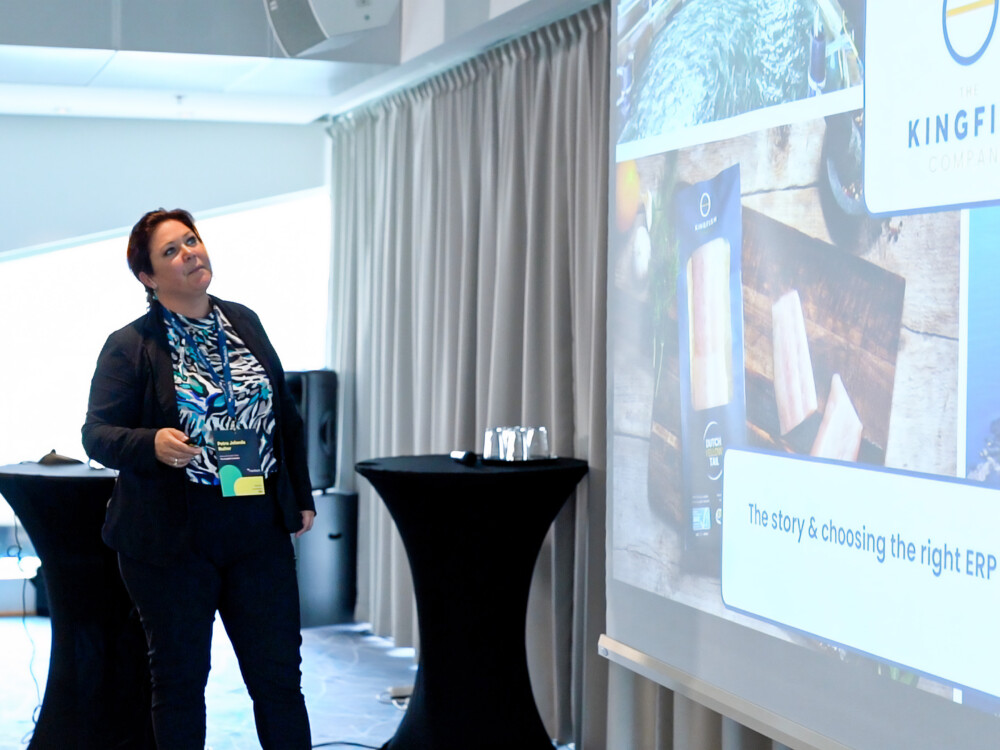
One of our customers, The Kingfish Company, experienced these challenges firsthand.They struggled with the limitations of their outdated ERP system until they transitioned to a customized solution tailored to their specific operational needs. This move helped them streamline their processes, reduce costs, and improve overall efficiency.

“We are scaling our business and needed new tools that enable us to reach our goals. Now, we have optimized our workflow, as the Maritech software is fully integrated and absorbs the side-stream of information.“

Ready to make a change?

Don’t let outdated ERP systems slow down your business. Check out our free digital demos to see how a customized, scalable solution can better meet your needs and future-proof your seafood processes.

How Digitalization Can Solve Recruitment Challenges in the UK Seafood Industry

Is your UK seafood company ready for the next generation workforce?

The future of your seafood business depends on your ability to grow and evolve — and that starts with building a strong team. Attracting top talent is essential, and this is where your employer branding strategy becomes a key factor in staying competitive.

According to Forbes, millennials are set to make up 75% of the workforce by 2025, with Gen Z following closely behind. These two generations are reshaping the workplace, bringing new expectations and demands. For companies in the UK seafood industry, the need to adapt is more urgent than ever.

The UK Seafood Industry is currently facing recruitment challenges across the fisheries and seafood processing sectors, leading to intensified competition for talent. To overcome these obstacles, it’s crucial to understand what motivates the emerging workforce.

The oldest members of Gen Z are now 26 years old, and both millennials and Gen Z have grown up in a digital-first world. They expect work processes to be streamlined, digitized, and automated wherever possible.

For seafood companies across the world, and specifically in the UK, this means that investing in technology is no longer optional — it’s a necessity. To effectively attract and engage this tech-savvy generation, your employer branding strategy must reflect your commitment to innovation and modern work environments.

So where can Maritech help?

We provide cutting-edge seafood software solutions designed to automate and optimize every stage of the supply chain — from production to processing, packing, trading, and logistics. Our technology empowers your company with greater transparency, control, and efficiency, ensuring you stay competitive in the rapidly evolving seafood industry.

With the millennial generation soon to dominate the workforce and Gen Z close behind, staying ahead means positioning your company as an innovative and attractive employer. By embracing digital solutions, your seafood business can appeal to the expectations of the next generation and overcome the recruitment challenges facing the UK seafood industry.

Investing in technology isn’t just about operational efficiency — it’s about strengthening your employer branding strategy to secure the talent you need to thrive in the future.

The Imperative of Automation in the Seafood Industry

In the dynamic landscape of the seafood industry, automation is no longer a luxury but a necessity.

Companies that delay adopting automated systems like seafood ERP risk facing operational inefficiencies, escalating costs, and falling behind their competitors.

Almost every week, customers are going live on Maritech Cloud, marking a strategic move towards modern, scalable SaaS solutions that enhance seafood traceability and streamline operations. Do you want to take the risk of competitors passing you by because you waited too long to embrace digitalization and seafood automation?

A frequent question from small and medium-sized businesses is, “Why change something that works, for now?” The answer lies in the potential vulnerabilities of relying solely on manual processes and systems like Excel. Imagine the smart employee who developed your Excel program leaves—can your operations continue seamlessly? The likely answer is no, which poses a significant risk. Relying solely on Excel leaves businesses exposed to disruptions and inefficiencies, which could be mitigated with robust seafood ERP software.

3 Steps to Get Started with Seafood Automation

Step 1: Evaluate Your Current Processes

Conduct a thorough assessment of your existing operations to identify areas where seafood ERP software and seafood automation can drive efficiency and reduce costs.

Step 2: Choose the Right Technology Partner

Select a partner with expertise in the seafood industry and a proven track record of successful seafood ERP and seafood software implementations. A knowledgeable partner will help you navigate the complexities of seafood automation and ensure that the chosen solutions align with your specific business needs.

Step 3: Train Your Team

Ensure your staff is well-trained on the new seafood automation systems to maximize the benefits of seafood software and maintain seamless operations. Proper training is crucial for leveraging the full potential of your new seafood ERP software, enabling your team to work more efficiently and effectively.

Transitioning to a standardized, tailored seafood software solution not only mitigates these risks but also offers enhanced transparency and control, which are essential for sustainable growth. With our automation solutions, customers gain more than just functionality—they gain peace of mind.

“We believe in empowering our customers with secure, user-friendly, and innovative cloud solutions. Their success is our success.”

Maritech Invoice Management