Cloud technology is a game changer for the seafood industry

Cloud technology is a game changer for the seafood industry.

As technology advances, many seafood companies are investing more and more in digitalization and in transforming their businesses into data-driven ones. Data-driven organizations require data infrastructure. For these forward-looking companies, the increased use of cloud technology is proving to be a game changer.

The future is digital, we see that everywhere in the world. To be credible, claims of sustainability, legality, or social responsibility need to be linked with verifiable traceability. Consumers have come to expect the availability of digital technology telling the story of the fish they consume. But the advent of whole supply chain technology such as that offered by Maritech Cloud systems offers so much more than traceability and compliance.

Connecting your people

Seafood production can be thought of as the ultimate remote workforce. Whether based on wild catch, fish farming operations, or both, fisheries are not conveniently clustered in central locations. With such a dispersed workforce, the challenges of communication from ship to shore and factory floor to sales office are difficult. In the past, too often, information has flowed from the top down, with production and sales planning tools missing the real-time forecasting of incoming harvest or catch or outgoing logistics to be effective. Cloud systems mean that information can be accessed and shared by all, wherever they are located. Operations can act as one informed crew.

Connecting Supply Chains

Standard to all Maritech customers is Maritech friends. This is an easy way to enhance your supply chain with electronic exchange of purchase and sales information between Maritech Cloud users. Seamlessly send all needed information and documents throughout your supply chain as if they were internal to your organization, with enhanced security of information exchange. This level of inter-operability is not possible in on-prem solutions.

Mitigating risk through enhanced security

The seafood industry is more exposed to cyber-security breaches than ever. The potential for being hacked or becoming a victim of a ransomware attack is escalating. Do you have a plan for recovery if critical systems are compromised, opening up your company to stolen confidential information, loss of critical records, and extended down-time? Cloud architecture has tiered security defenses, continuously logging and monitoring threats and protecting you in ways that are not possible simply using in house IT.

Out of date technologies and old servers pose security risks. As many companies have focused on updating operational and hardware technologies, they have failed to update their legacy systems to comply with modern security standards. These can cause major operational outages and complete shutdowns if compromised. For most companies, the expense of managing cyber-security in-house, without a dedicated team, is virtually impossible.  Maritech’s cloud-based software, built on Microsoft Azure, offers cost-effective data protection with a powerful and secure, hardened infrastructure which would not be possible using traditional legacy on-premises systems.

Data-driven decisions

The complex business of sustainably producing seafood also produces a lot of operational data that rarely gets used as business intelligence to drive the value of the product at the end of the line. Information data links all of the various facets of the fish business together. BI tools, such as Maritech Analytics, collect and combine vast amounts of data, presenting key information and performance data, in near real-time, fusing it with selected external data sources such as crucial trade and market price flows. These critical tools enhance your ability to overlay and benchmark your own performance, strategically plan production, and forward price plan to gain a truly competitive edge.

Leveling the playing field

“Maritech’s cloud-based software has really meant that sophisticated digital systems that would once have been out of reach for small operators are now readily available with absolutely no huge up-front capital costs and complex IT implementation cycles,” says Will Greenwood, Maritech’s Managing Director for North American sales operations.

“We have seen, for example, one of our small customers, who is based in New Jersey, be fully setup and running our software to manage international seafood sales operations within the space of a week. In addition to Maritech Cloud, we provide integrations to our own solutions with labelling and packing systems, logistics, quality, claims, and IoT, as well as open, standards-based data integrations to 3rd party systems such as accounting, ERP, or even governmental reporting. This kind of flexibility is revolutionizing the way seafood companies can now do business.”

Will Greenwood, Maritech Halifax

Want to see how the core functionalities in Maritech look like, and works? Have a look at our free digital demos: here for seafood solutions, and here for our logistics solutions.


FDA legal requirements – FSMA Final Rule on Requirements for Additional Traceability Records

Traceability laws and standards in the USA – what level do you need?

Several traceabilty changes have come into effect in the United States recently that have caused some confusion for suppliers of seafood as to what is needed to meet traceability regulations and also what is required for different aspects of the supply chain. This article outlines the specifications and differences between the various traceability schemes – both legal and market driven.

FSMA Final Rule on Requirements for Additional Traceability Records

The FDA (Food and Drug Administration) is the department in the US government responsible for food safety. The FDA’s new traceability rule – FSMA (Food Safety Modernization Act) Final Rule on Requirements for Additional Traceability Records for Food identified on the Food Traceability List (FTL) came into effect in November/2022 but will come under final enforcement on January 20. 2026. The ruling applies to all companies, including foreign entities, who manufacture, process, pack, or hold foods included on the Food Traceability List (FTL) within the United States. Main highlights of the new rule for seafood producers and suppliers include:

  • The Food Traceability List (FTL) has been expanded to include all finfish (with the exception of catfish), crustaceans, molluscan shellfish, and bivalves, in both fresh and frozen forms.
  • The Food Traceability Rule requires companies to maintain and provide to their supply chain partners specific information (key data elements or KDEs) for each physical movement or transformation in the food’s supply chain (called Critical Tracking Events or CTEs). Most specifically, the new rules require the establishment of a Traceability Lot Code from a first receiver of wild caught fish or a first harvester/packing plant of farmed fish.
  • Once a traceability lot code has been assigned, it can only be changed when the food is transformed (processed into a different item or repacked) and a link to the prior lot code must be preserved by the processor. The intention of the traceability lot is to link incoming with outgoing product within a firm and from one point in the supply chain to the next.
  • In the case of an audit or a recall, a company must be able to provide an electronic sortable spreadsheet containing relevant lot traceability information to the FDA within 24 hours of a request (or within some reasonable time to which the FDA has agreed) when necessary to assist the FDA during an outbreak, recall, or other threat to public health.
FSMA Purchase & Sales is fully compliant with FDA

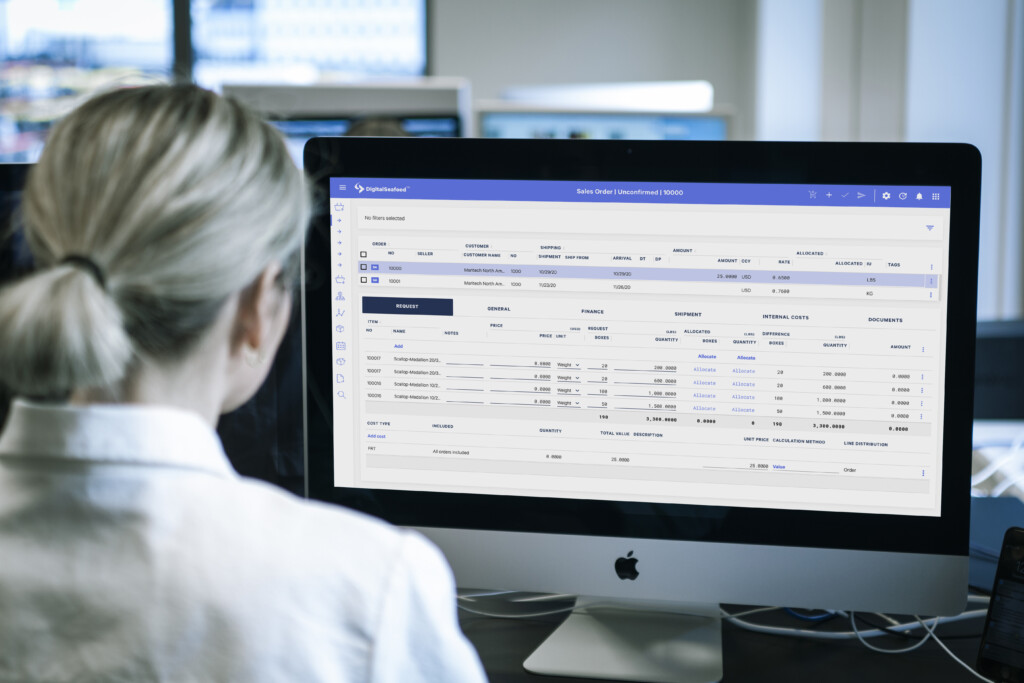
Maritech Purchase & Sales is fully compliant with the new FDA rules and there are provisions within the software for recording and transmitting the required information and, in the case of a recall, generating a spreadsheet for the needed lot information via an Analytics traceability report.

At a high level, Maritech Purchase & Sales allows you to assign a lot no. when fish is first received and ensures the lot number is preserved and cannot be changed unless the fish is processed/transformed into a new item. The origin lot(s) that went into the production of the new item is preserved in the allocation of the raw material to the new production record or in the case of a repack, the allocation to the repack.

For first receivers of wild fish, Purchase & Sales allows detailed recording of vessel and catch details through landing notes (in Norway) or Fishing Trips (outside of Norway). For first receivers of farmed fish, when an item is stocked, if from an aquaculture harvest, both the farmer and the cage no.or pen no. can be included in the record. In addition, in Norway, a locality from Barents watch can be linked to the stocking record which gives precise location and history information related to the site, cage units, etc. Finally, an origin fish CV can be linked to the stocking record which can provide, in addition to fish feeding and medication history, etc. precise unit information for harvested fish.

The FDA ruling refers to a traceability lot code source reference. This is detailed information about the vessel and catch in the case of wild caught fish or the farm harvest location (fish unit location, etc.).

While detailed information (catch area, vessel or harvest unit, etc.) must be maintained by the first receiver of the fish – who also issues the origin lot that follows the fish – all of these details do not need to be sent to every subsequent receiver of the fish. Instead, what can be sent, along with the traceability lot code, is a traceability lot code source reference. This allows the FDA to know the business name, phone number and address of the provider of the traceability lot code. It can be in the form of an FDA food facility registration number or a web address that provides the company information.

GDST (Global Dialogue on Seafood Traceability) Standard

GDST is a non-profit foundation that was established in 2017 as a partnership between the World Wildlife Fund (WWF) and the Institute of Food Technologists (IFT). It developed a standard by which seafood supply chain partners can use a common set of data elements that need to be documented and transmitted electronically between GDST compliant trading partners and provides the technical formats for how the data elements can be transmitted. The GDST is not a legal requirement. However, if you are partnered with some grocery retailers – Wegmans, Whole Foods, or Sainsbury’s for example – then you may be required to use the GDST standard when providing shipments of fish to these grocery companies.

In addition, if you wish to market yourself as a GDST compliant provider, then you must partner with GDST. GDST Partnerships have four tiers: each with different fees and benefits. The emphasis of the GDST goes beyond the strict legal traceability standards required by the FDA ruling and has an additional focus on proving that your products are sustainably caught/grown and ethically produced with regards to environmental certifications and human welfare policies. In addition, to use the GDST standard to comply with FDA legal requirements, you have to use an extended standard from GDST as they do not explicitly capture, for example, the first receiver information needed by the FDA.

Much of this additional detail can also be recorded in Purchase & Sales. For example, you can record tag certifications such as MSC or Global GAP to accompany the fish from stocking to sale. However, the specific interface needed between the GDST retailer and Maritech Purchase & Sales is an additional external interface and not included in the base software product. In addition, some elements such as participation in a certifying body, such as Global GAP, are outside of the Maritech software system. While these details can be recorded, it is up to the seafood company to register and comply with the certification body itself.

Details of what is required by a GDST partnership can be found here:

https://thegdst.org/

Trace Register

Trace Register (TR5) is a private company (established in 2005) that provides traceability tracking for seafood suppliers. It is not an ERP and only gathers the traceability information from seafood producers and suppliers that is needed by retailers, usually captured in the seafood supplier’s ERP system. It provides, in addition, an interface for integrated and automated Seafood Import Monitoring Program (SIMP) filings and other regulatory bodies. Like GDST, there are some grocery retailers – Whole Foods, for example – that require seafood suppliers to use Trace Register. Trace Register is also a partner with GDST but not all retailers who require Trace Register records require GDST standards. These two organizations are similar but do not use precisely the same interface.

Details of what Trace Register offers can be found here:

https://www.traceregister.com/

Maritech Purchase & Sales does gather the information that needs to be input into Trace Register. However, an explicit integration between the two systems is not part of the base Maritech Cloud product and needs to be developed as an external integration depending upon your company’s specific requirements.

Is your ERP system costing you more than you think?

With more than 500 companies on our customer list, we’ve observed a clear pattern of frustration around generic ERP solutions.

Is this your company?

Many companies that opted for generic ERP systems 10-15 years ago now find these solutions unable to handle the complexities of modern seafood processes.

Rather than switching systems, many companies try to adjust their existing ERP to increase efficiency. But these adjustments often come with significant costs, as even minor changes can quickly become expensive.

Generic ERP systems, designed as “one-size-fits-all,” don’t always prioritize the specific needs of seafood businesses.

Sound familiar?

If this resonates with you, here are three tips that can help:

1. Consider customized solutions:

A generic ERP might not be the right fit for the intricate demands of seafood processing. A customized solution can offer the exact functionality your business requires, such as enhanced traceability and quality control features.

2. Check integration capabilities:

Ensure your ERP system integrates seamlessly with the other tools you use. Strong integrations can improve workflow efficiency and reduce the need for costly manual adjustments.

3. Choose a scalable system:

Invest in software that grows with your business. A scalable ERP allows you to expand and adapt as your business evolves, minimizing future disruptions.


Wanted a scalable system

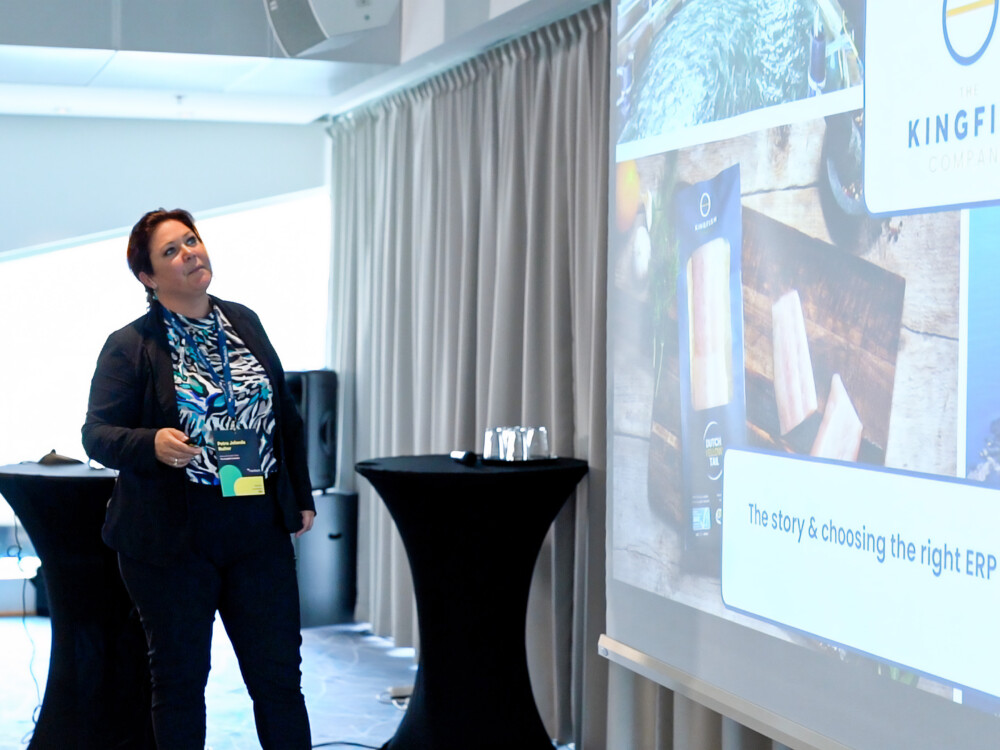
One of our customers, The Kingfish Company, experienced these challenges firsthand.They struggled with the limitations of their outdated ERP system until they transitioned to a customized solution tailored to their specific operational needs. This move helped them streamline their processes, reduce costs, and improve overall efficiency.

“We are scaling our business and needed new tools that enable us to reach our goals. Now, we have optimized our workflow, as the Maritech software is fully integrated and absorbs the side-stream of information.“

Ready to make a change?

Don’t let outdated ERP systems slow down your business. Check out our free digital demos to see how a customized, scalable solution can better meet your needs and future-proof your seafood processes.

How Digitalization Can Solve Recruitment Challenges in the UK Seafood Industry

Is your UK seafood company ready for the next generation workforce?

The future of your seafood business depends on your ability to grow and evolve — and that starts with building a strong team. Attracting top talent is essential, and this is where your employer branding strategy becomes a key factor in staying competitive.

According to Forbes, millennials are set to make up 75% of the workforce by 2025, with Gen Z following closely behind. These two generations are reshaping the workplace, bringing new expectations and demands. For companies in the UK seafood industry, the need to adapt is more urgent than ever.

The UK Seafood Industry is currently facing recruitment challenges across the fisheries and seafood processing sectors, leading to intensified competition for talent. To overcome these obstacles, it’s crucial to understand what motivates the emerging workforce.

The oldest members of Gen Z are now 26 years old, and both millennials and Gen Z have grown up in a digital-first world. They expect work processes to be streamlined, digitized, and automated wherever possible.

For seafood companies across the world, and specifically in the UK, this means that investing in technology is no longer optional — it’s a necessity. To effectively attract and engage this tech-savvy generation, your employer branding strategy must reflect your commitment to innovation and modern work environments.

So where can Maritech help?

We provide cutting-edge seafood software solutions designed to automate and optimize every stage of the supply chain — from production to processing, packing, trading, and logistics. Our technology empowers your company with greater transparency, control, and efficiency, ensuring you stay competitive in the rapidly evolving seafood industry.

With the millennial generation soon to dominate the workforce and Gen Z close behind, staying ahead means positioning your company as an innovative and attractive employer. By embracing digital solutions, your seafood business can appeal to the expectations of the next generation and overcome the recruitment challenges facing the UK seafood industry.

Investing in technology isn’t just about operational efficiency — it’s about strengthening your employer branding strategy to secure the talent you need to thrive in the future.

The Imperative of Automation in the Seafood Industry

In the dynamic landscape of the seafood industry, automation is no longer a luxury but a necessity.

Companies that delay adopting automated systems like seafood ERP risk facing operational inefficiencies, escalating costs, and falling behind their competitors.

Almost every week, customers are going live on Maritech Cloud, marking a strategic move towards modern, scalable SaaS solutions that enhance seafood traceability and streamline operations. Do you want to take the risk of competitors passing you by because you waited too long to embrace digitalization and seafood automation?

A frequent question from small and medium-sized businesses is, “Why change something that works, for now?” The answer lies in the potential vulnerabilities of relying solely on manual processes and systems like Excel. Imagine the smart employee who developed your Excel program leaves—can your operations continue seamlessly? The likely answer is no, which poses a significant risk. Relying solely on Excel leaves businesses exposed to disruptions and inefficiencies, which could be mitigated with robust seafood ERP software.

3 Steps to Get Started with Seafood Automation

Step 1: Evaluate Your Current Processes

Conduct a thorough assessment of your existing operations to identify areas where seafood ERP software and seafood automation can drive efficiency and reduce costs.

Step 2: Choose the Right Technology Partner

Select a partner with expertise in the seafood industry and a proven track record of successful seafood ERP and seafood software implementations. A knowledgeable partner will help you navigate the complexities of seafood automation and ensure that the chosen solutions align with your specific business needs.

Step 3: Train Your Team

Ensure your staff is well-trained on the new seafood automation systems to maximize the benefits of seafood software and maintain seamless operations. Proper training is crucial for leveraging the full potential of your new seafood ERP software, enabling your team to work more efficiently and effectively.

Transitioning to a standardized, tailored seafood software solution not only mitigates these risks but also offers enhanced transparency and control, which are essential for sustainable growth. With our automation solutions, customers gain more than just functionality—they gain peace of mind.

“We believe in empowering our customers with secure, user-friendly, and innovative cloud solutions. Their success is our success.”

Maritech Invoice Management

A year of growth for Maritech Iceland

“We have a strong brand and product-market fit in both the fishing and aquaculture industry in Iceland” says Konráð Hatlemark Olavsson, Country Manager, Maritech.

In 2023, we really proved our solid position in Iceland. Key highlights of the year was the successful Maritech Cloud project at Arnarlax, Maritech Eye at UA/Samherji and UR Seafood, and the ongoing Maritech Cloud and Packing project with Matorka.

“The Icelandic seafood industry has been evolving over the decades, transitioning from being driven by manual labor to becoming digitalized and automated. All this new technology requires precise control and coordination. It is the role of companies like ours to make things easier and ensure that managers have the best access to clear information, automated documentation and user-friendly tools.

In fisheries, the need for data collection and processing begins at the quota level. Then, software is needed to monitor the catches, record their progress, and notify the relevant parties. Landing, processing, utilization, packaging, storage, sales, transportation, and traceability – all these are things that need to be recorded and managed. Within the aquaculture segment, we can help our customers ensure efficient handling of all processes from harvest to plate, with automated documentation through the value chain.”

We have satisfied reference customers and a lot more to offer the seafood industry in Iceland. We are looking forward to further growth and new milestones in 2024.

The Future of Seafood

Bonus Episode 2: What are the consequences of poor data security?

In this episode

In this episode, we sit down with Olumide, our cloud operations consultant and cybersecurity specialist, with a PhD in the field. Olumide shares his insights to the critical importance of robust data security measures for businesses.

Olumide’s message is clear: having reliable and robust disaster recovery solutions empowers organizations to confidently confront potential cyber threats, essentially telling hackers to “back off.”


Link to the episode on spotify (videopodcast) here

Link to the episode on Apple Podcast here

How to defend yourself against cybersecurity threats?

He also highlights the vulnerability of on-premises solutions, cautioning that businesses operating within this framework are likely already compromised or at risk of being hacked. He advocates for the proactive migration of assets to the cloud as a crucial step towards enhancing security.

In the best-case scenario, Olumide suggests rethinking solution design to embrace cloud-native architectures. By doing so, businesses can better defend against cybersecurity threats and ensure their systems are well-prepared to quickly recover in the event of a successful attack.

Data Security Podcast

About the podcast:

This is the podcast where we cut through the noise and ask the questions everyone’s truly curious about. In this podcast, we delve deep into the seafood industry, exploring what sets successful leaders apart, what differentiates them, and why they thrive. Join us as we uncover their unique stories, discussing the challenges they’ve overcome and the key factors that contribute to their success. We sit down with both big and small players that are shaping the seafood industry today.

What to listen to next:

How Grieg Seafood plans to double their production and produce 150 000 tons of salmon:

What are the risks of postponing seafood automation?

How is Myre Fiskemottak approcahing the increasing challenges in the whitefish industry?

We have launched E-learning in Maritech Cloud™

In 2023 we launched E-learning for our Cloud customers.

It marked a milestone aimed at simplifying the process for our customers to get maximum value from Maritech Cloud and is a testament to our commitment to making our solutions user-friendly and the functionalities more accessible.

The E-learning platform includes various features, such as video tutorials, a brand-new Help Center with a bunch of user guides, real-time updates on product news through our News Feed, and easy access to all E-learning content via our search portal.

The highlight is its seamless integration into our user interface. This, in turn, provides our customers with an enhanced user experience, tailored training opportunities, smooth integration of new modules, and efficient onboarding and training for new team members.

Our focus on E-learning underlines our dedication to delivering solutions that not only meet but exceed the needs of our customers!

Maritech community

In 2023 we also continued the work with Maritech Community. The Community is run by the board and facilitated by Maritech. The board is elected by and among the participants and reflects the diversity of our customers and the seafood and logistics side.

In November we organized Maritech Community’s first Digital Interest Meeting. The concept has emerged from good discussions with the board members currently serving in Maritech Community. The purpose and aim of this meeting are for our customers to engage in discussions around topics and issues that may be mutually beneficial to explore together.

Our first meeting was a success with more than 50 participants from both seafood and logistics. We will make this a quarterly event going forward as we intend to provide a platform for us to get even closer to our users. As a chairman of the board, Tom-Eirik Thorgersen from Grieg Seafood has led the Community to the next phase, and we are excited to see what we can achieve in the year to come.

Super User Day in Molde

On May 30th, Maritech Community hosted their first event in Molde for more than 30 of our super users in the seafood industry.  The purpose was to share experiences, build relationships, and provide insights into Maritech Cloud, with presentations on new functionalities and the future roadmap by our Product Managers, Joan Fiksdal and Marius Svenungsen.

Meet our Customer Success Team


As part of our continuous growth in both existing and new markets, we have now established our own Customer Success team.

There has been high speed in acquiring new clients and successfully converting existing customers to our modern Maritech Cloud solution. This growth demands more from us to ensure customer satisfaction. We see substantial untapped potential in customer development and believe that our new Customer Success team will play a key role in turning customers into loyal fans.


Thanks to our substantial efforts in streamlining deliveries, we have also empowered our services organization with the capacity to handle numerous complex projects simultaneously across all core markets and segments.

Combined with the big leaps we have made towards self-service and enhancing our user experience through the launch of our new help center and E-learning platform, we are confident this will bring ongoing success to our Cloud customers.

Read about how we are Driving customer transition from On-Premise to Cloud.

Maritech Invoice Management

The team

Tone Mykløy Helseth and Frida Svendsen will be at the forefront, understanding our customers and their needs, offering expert guidance where it’s needed, and most importantly, helping them reach the full potential of our products.

We are still in the early stages of refining this approach, but we are confident it will bring significant value to our Cloud customers.

Read about some of our customers here.