ISO 27001: A Mark of Quality in Information Security

Maritech has always kept security high on the agenda – and now it is formally documented. The ISO 27001 certification confirms that we work systematically to protect both our own and our customers’ data, providing added assurance that information is handled securely.

Protecting data is about more than technology – it requires culture, structure, and continuous improvement. ISO/IEC 27001:2023 is the internationally recognized standard for information security, offering a clear framework for how organizations should safeguard the confidentiality, integrity, and availability of all information.

The certification reinforces what has long been part of Maritech’s daily operations.

– We have had a strong focus on security for many years. This certification validates the work we have done and serves as a mark of quality for us and our customers, says Thomas Brevik, Interim CEO at Maritech.

ISO 27001 is not only about technical measures; it also involves people, processes, and risk management. For Maritech, it means that the entire chain of information security – from internal routines to the handling of customer data – follows a documented and verifiable system.

– For our customers, the certification provides added confidence. We adhere to recognized standards and work continuously to improve, both technically and organizationally, says Robert Veiset, IT and Operations Manager at Maritech.

The certification also provides clear advantages in supply chains and procurement processes, where security requirements are often part of the evaluation criteria. ISO 27001 demonstrates that Maritech meets these expectations.
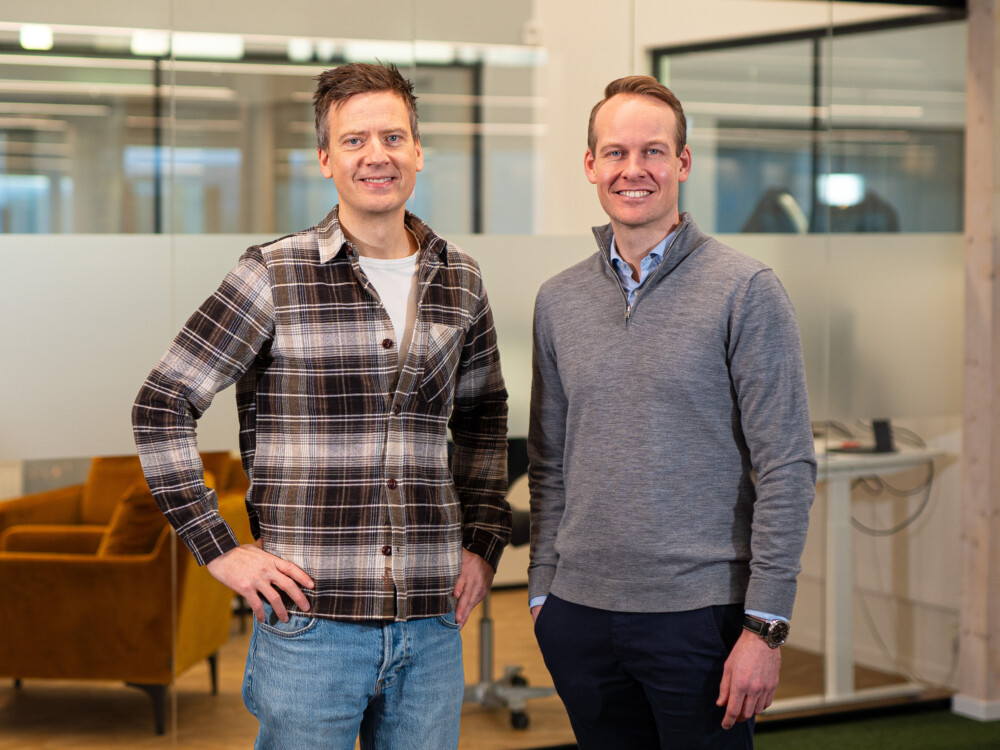
Robert Veiset Thomas Brevik

– In a time of increasing digital risk, it is important for customers to know that we take security seriously. ISO 27001 confirms exactly that, Brevik adds.

With this certification, we formalize our long-term commitment to security – and provide our customers with even greater confidence that information is handled safely and responsibly.
Cloud technology is a game changer for the seafood industry

Cloud technology is a game changer for the seafood industry.

As technology advances, many seafood companies are investing more and more in digitalization and in transforming their businesses into data-driven ones. Data-driven organizations require data infrastructure. For these forward-looking companies, the increased use of cloud technology is proving to be a game changer.

The future is digital, we see that everywhere in the world. To be credible, claims of sustainability, legality, or social responsibility need to be linked with verifiable traceability. Consumers have come to expect the availability of digital technology telling the story of the fish they consume. But the advent of whole supply chain technology such as that offered by Maritech Cloud systems offers so much more than traceability and compliance.

Connecting your people

Seafood production can be thought of as the ultimate remote workforce. Whether based on wild catch, fish farming operations, or both, fisheries are not conveniently clustered in central locations. With such a dispersed workforce, the challenges of communication from ship to shore and factory floor to sales office are difficult. In the past, too often, information has flowed from the top down, with production and sales planning tools missing the real-time forecasting of incoming harvest or catch or outgoing logistics to be effective. Cloud systems mean that information can be accessed and shared by all, wherever they are located. Operations can act as one informed crew.

Connecting Supply Chains

Standard to all Maritech customers is Maritech friends. This is an easy way to enhance your supply chain with electronic exchange of purchase and sales information between Maritech Cloud users. Seamlessly send all needed information and documents throughout your supply chain as if they were internal to your organization, with enhanced security of information exchange. This level of inter-operability is not possible in on-prem solutions.

Mitigating risk through enhanced security

The seafood industry is more exposed to cyber-security breaches than ever. The potential for being hacked or becoming a victim of a ransomware attack is escalating. Do you have a plan for recovery if critical systems are compromised, opening up your company to stolen confidential information, loss of critical records, and extended down-time? Cloud architecture has tiered security defenses, continuously logging and monitoring threats and protecting you in ways that are not possible simply using in house IT.

Out of date technologies and old servers pose security risks. As many companies have focused on updating operational and hardware technologies, they have failed to update their legacy systems to comply with modern security standards. These can cause major operational outages and complete shutdowns if compromised. For most companies, the expense of managing cyber-security in-house, without a dedicated team, is virtually impossible.  Maritech’s cloud-based software, built on Microsoft Azure, offers cost-effective data protection with a powerful and secure, hardened infrastructure which would not be possible using traditional legacy on-premises systems.

Data-driven decisions

The complex business of sustainably producing seafood also produces a lot of operational data that rarely gets used as business intelligence to drive the value of the product at the end of the line. Information data links all of the various facets of the fish business together. BI tools, such as Maritech Analytics, collect and combine vast amounts of data, presenting key information and performance data, in near real-time, fusing it with selected external data sources such as crucial trade and market price flows. These critical tools enhance your ability to overlay and benchmark your own performance, strategically plan production, and forward price plan to gain a truly competitive edge.

Leveling the playing field

“Maritech’s cloud-based software has really meant that sophisticated digital systems that would once have been out of reach for small operators are now readily available with absolutely no huge up-front capital costs and complex IT implementation cycles,” says Will Greenwood, Maritech’s Managing Director for North American sales operations.

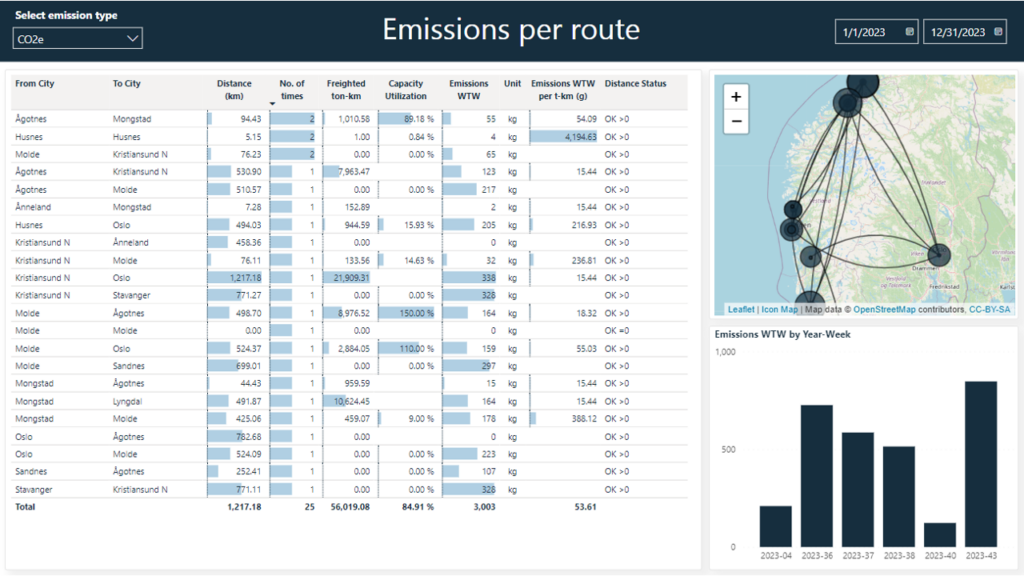
“We have seen, for example, one of our small customers, who is based in New Jersey, be fully setup and running our software to manage international seafood sales operations within the space of a week. In addition to Maritech Cloud, we provide integrations to our own solutions with labelling and packing systems, logistics, quality, claims, and IoT, as well as open, standards-based data integrations to 3rd party systems such as accounting, ERP, or even governmental reporting. This kind of flexibility is revolutionizing the way seafood companies can now do business.”

Will Greenwood, Maritech Halifax

Want to see how the core functionalities in Maritech look like, and works? Have a look at our free digital demos: here for seafood solutions, and here for our logistics solutions.

The Imperative of Automation in the Seafood Industry

In the dynamic landscape of the seafood industry, automation is no longer a luxury but a necessity.

Companies that delay adopting automated systems like seafood ERP risk facing operational inefficiencies, escalating costs, and falling behind their competitors.

Almost every week, customers are going live on Maritech Cloud, marking a strategic move towards modern, scalable SaaS solutions that enhance seafood traceability and streamline operations. Do you want to take the risk of competitors passing you by because you waited too long to embrace digitalization and seafood automation?

A frequent question from small and medium-sized businesses is, “Why change something that works, for now?” The answer lies in the potential vulnerabilities of relying solely on manual processes and systems like Excel. Imagine the smart employee who developed your Excel program leaves—can your operations continue seamlessly? The likely answer is no, which poses a significant risk. Relying solely on Excel leaves businesses exposed to disruptions and inefficiencies, which could be mitigated with robust seafood ERP software.

3 Steps to Get Started with Seafood Automation

Step 1: Evaluate Your Current Processes

Conduct a thorough assessment of your existing operations to identify areas where seafood ERP software and seafood automation can drive efficiency and reduce costs.

Step 2: Choose the Right Technology Partner

Select a partner with expertise in the seafood industry and a proven track record of successful seafood ERP and seafood software implementations. A knowledgeable partner will help you navigate the complexities of seafood automation and ensure that the chosen solutions align with your specific business needs.

Step 3: Train Your Team

Ensure your staff is well-trained on the new seafood automation systems to maximize the benefits of seafood software and maintain seamless operations. Proper training is crucial for leveraging the full potential of your new seafood ERP software, enabling your team to work more efficiently and effectively.

Transitioning to a standardized, tailored seafood software solution not only mitigates these risks but also offers enhanced transparency and control, which are essential for sustainable growth. With our automation solutions, customers gain more than just functionality—they gain peace of mind.

“We believe in empowering our customers with secure, user-friendly, and innovative cloud solutions. Their success is our success.”

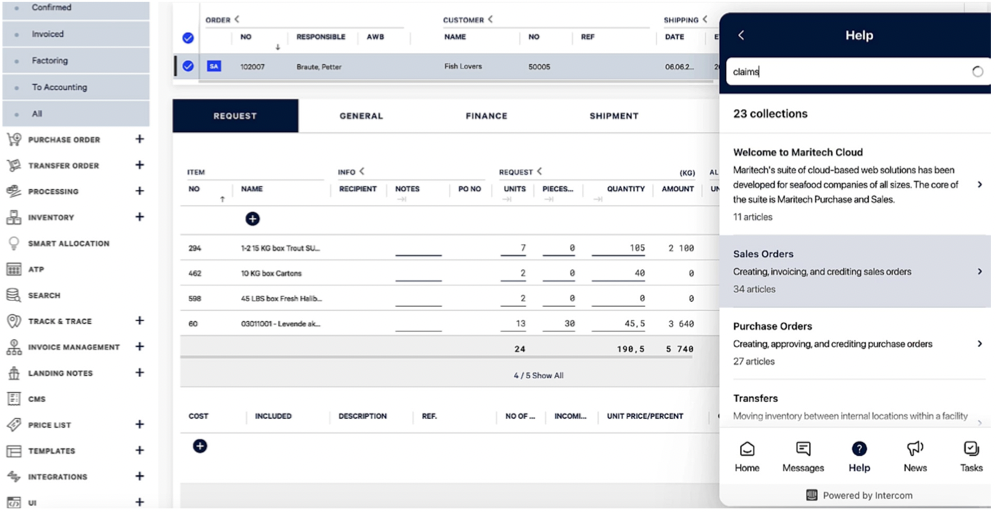
Maritech Invoice Management

Driving customer transition from On-Premise to Cloud

In the dynamic landscape of both the seafood and logistics industry, Maritech is witnessing a surge in new and existing customers embracing the transition to cloud.

Almost every week, customers are going live on Maritech Cloud, marking a strategic move towards modern, scalable SaaS solutions.

Customer success in the cloud

“A win-win”, says Bjørnar Kvalsnes, EVP Product & Technology in Maritech. “While our customers increase their margins and efficiency, the commercial success strengthens our power to keep innovating and develop new functionality.”

He highlights the pivotal role played by Maritech’s cloud solutions in driving strategic growth, positioning the company as a reliable and modern partner.

“The transition from on-premise to Maritech Cloud is gaining momentum among all customers of all sizes and categories, with the wave of migration evident across both Europe and North America.

The success stories resonate with the tailored tools that specifically cater to the seafood and logistics industry, offering unparalleled support for core business operations. And with full traceability from sea to table for the companies handling fish and shellfish. Moreover, Maritech Cloud eliminates server costs and the need for expensive upgrades.”

Bjørnar Kvalsnes EVP Product & Technology Maritech

Maritech Cloud + Microsoft Azure

Maritech’s extensive expertise within the seafood and logistics verticals is a compelling reason for customers to make the shift to the cloud. Our commitment to delivering top-tier, secure cloud services is underscored by the following key points:

  • Multi-Tenant Architecture: All Maritech Cloud software is multi-tenant, built, and hosted on Microsoft Azure, ensuring a robust and trust- worthy business platform.
  • Worldwide Reach: Leveraging Azure’s exten- sive network of data centers, Maritech ensures a global presence with low latency and high performance for all clients, regardless of their geographical location.
  • Scalability: Azure’s unmatched scalability enables Maritech to grow alongside other busi- nesses, seamlessly adapting to evolving requirements.
  • Reputable Platform: Microsoft Azure is one of the world’s most well-known and trusted plat- forms, particularly in the business segment, making it an ideal choice for businesses of all sizes.


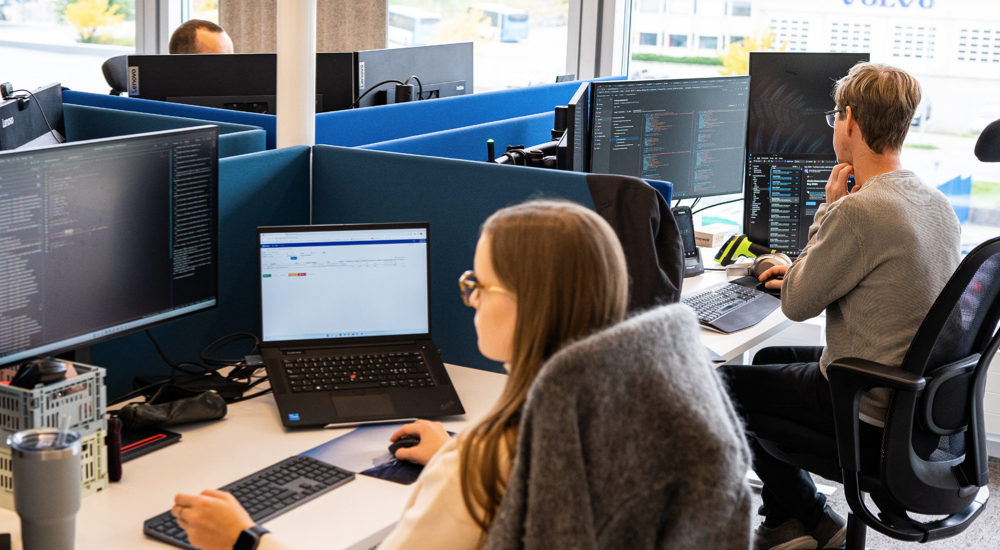
More than 40 developers in our office in Molde

We are proud that all our development and testing is done by our own team, at our offices in Norway and Halifax. This way we can work closely with our customers in everything we do.

“We believe in empowering our customers with secure, user-friendly, and innovative cloud solutions. Their success is our success.”

Going digital – the seafood industry’s technological transformation

In reality, most data in seafood operations have historically been recorded on paper and not passed along the chain.

Traditionally, the seafood industry has lagged behind other food industries in terms of digitalization. Until recently, the industry has been dependent upon a backbone of paper-based systems, despite individual operations capturing digital records. This has been, in part, because digital systems, used primarily to control inventory and drive efficiency, have been largely reliant on closed database systems ans Excel. Processing companies have for many years digitally tracked the majority of data relevant to their own businesses, but they have often lacked the additional resources needed to collate the data as it is not held in a coordinated way that allows it to be shared with other supply chain participants.

The remoteness of fishing farms and wild capture fishing vessels has meant that paper logs held much of the origin records of the fish, with data access in real-time seldom possible. So, in reality, most data in seafood operations has been recorded on paper and not easily passed along the chain. This has often resulted in inaccurate and fragmented data and unreported, unregulated, and even illegal fish catches with unlabeled and/or mislabeled products.

Transforming the financial and technological barriers to digitalization

The huge volume of different types of data coming from different sources, or requested by different partners, all in different formats; has set up barriers to not only the integration of regulatory and other data streams but has also made adopting new technologies cost prohibitive for smaller operators. But a convergence of new technologies in recent years is significantly transforming the seafood industry, making the unimaginable of even a few years ago, now possible.

Maritech Software

The impact of the cloud on seafood’s digital transformation

Cloud computing has opened up new software possibilities for small operators, who can now subscribe to tailored seafood software services at a fraction of the upfront capital costs that old on-premise software versions required. With the advent of the cloud, data can also be shared in new and less restrictive ways. Digitally interoperable systems and data standards, such as those being developed by the Global Dialogue on Seafood Traceability (GDST), are rapidly taking shape. The seafood industry is on a clear path to digital transformation, from the growing prevalence of e-log books on vessels to IoT (Internet of Things) sensor systems that can send farmed fish data directly to the cloud. Secure cloud-based databases allow fishing, aquaculture, and processing businesses to upload and share information in new ways – with buyers, regulators, supply chain partners and ultimately, with consumers.

The increasing value of data

Once data is digitized, it not only impacts the efficiency of data sharing across supply chains, it opens up the possibilities of analysis and discovery, through analytics and BI (Business Intelligence). The availability of digital data can provide operational and strategic decision support through continuous data analysis, identifying everything from the most up to the minute sales price points for the fish itself to uncovering waste and inefficiencies at all points in the supply chain. When combined with the emergence of AI, actionable planning can be taken to a whole new level.

Maritech is a trusted technology partner with 40 years of experience supporting the global seafood industry through change. Contact us if you want to know how we can support yours!


Written by Andrea Riser, Team Product & Technology, Maritech