ISO 27001: A Mark of Quality in Information Security

Maritech has always kept security high on the agenda – and now it is formally documented. The ISO 27001 certification confirms that we work systematically to protect both our own and our customers’ data, providing added assurance that information is handled securely.

Protecting data is about more than technology – it requires culture, structure, and continuous improvement. ISO/IEC 27001:2023 is the internationally recognized standard for information security, offering a clear framework for how organizations should safeguard the confidentiality, integrity, and availability of all information.

The certification reinforces what has long been part of Maritech’s daily operations.

– We have had a strong focus on security for many years. This certification validates the work we have done and serves as a mark of quality for us and our customers, says Thomas Brevik, Interim CEO at Maritech.

ISO 27001 is not only about technical measures; it also involves people, processes, and risk management. For Maritech, it means that the entire chain of information security – from internal routines to the handling of customer data – follows a documented and verifiable system.

– For our customers, the certification provides added confidence. We adhere to recognized standards and work continuously to improve, both technically and organizationally, says Robert Veiset, IT and Operations Manager at Maritech.

The certification also provides clear advantages in supply chains and procurement processes, where security requirements are often part of the evaluation criteria. ISO 27001 demonstrates that Maritech meets these expectations.

Robert Veiset Thomas Brevik

– In a time of increasing digital risk, it is important for customers to know that we take security seriously. ISO 27001 confirms exactly that, Brevik adds.

With this certification, we formalize our long-term commitment to security – and provide our customers with even greater confidence that information is handled safely and responsibly.

Cloud technology is a game changer for the seafood industry

Cloud technology is a game changer for the seafood industry.

As technology advances, many seafood companies are investing more and more in digitalization and in transforming their businesses into data-driven ones. Data-driven organizations require data infrastructure. For these forward-looking companies, the increased use of cloud technology is proving to be a game changer.

The future is digital, we see that everywhere in the world. To be credible, claims of sustainability, legality, or social responsibility need to be linked with verifiable traceability. Consumers have come to expect the availability of digital technology telling the story of the fish they consume. But the advent of whole supply chain technology such as that offered by Maritech Cloud systems offers so much more than traceability and compliance.

Connecting your people

Seafood production can be thought of as the ultimate remote workforce. Whether based on wild catch, fish farming operations, or both, fisheries are not conveniently clustered in central locations. With such a dispersed workforce, the challenges of communication from ship to shore and factory floor to sales office are difficult. In the past, too often, information has flowed from the top down, with production and sales planning tools missing the real-time forecasting of incoming harvest or catch or outgoing logistics to be effective. Cloud systems mean that information can be accessed and shared by all, wherever they are located. Operations can act as one informed crew.

Connecting Supply Chains

Standard to all Maritech customers is Maritech friends. This is an easy way to enhance your supply chain with electronic exchange of purchase and sales information between Maritech Cloud users. Seamlessly send all needed information and documents throughout your supply chain as if they were internal to your organization, with enhanced security of information exchange. This level of inter-operability is not possible in on-prem solutions.

Mitigating risk through enhanced security

The seafood industry is more exposed to cyber-security breaches than ever. The potential for being hacked or becoming a victim of a ransomware attack is escalating. Do you have a plan for recovery if critical systems are compromised, opening up your company to stolen confidential information, loss of critical records, and extended down-time? Cloud architecture has tiered security defenses, continuously logging and monitoring threats and protecting you in ways that are not possible simply using in house IT.

Out of date technologies and old servers pose security risks. As many companies have focused on updating operational and hardware technologies, they have failed to update their legacy systems to comply with modern security standards. These can cause major operational outages and complete shutdowns if compromised. For most companies, the expense of managing cyber-security in-house, without a dedicated team, is virtually impossible.  Maritech’s cloud-based software, built on Microsoft Azure, offers cost-effective data protection with a powerful and secure, hardened infrastructure which would not be possible using traditional legacy on-premises systems.

Data-driven decisions

The complex business of sustainably producing seafood also produces a lot of operational data that rarely gets used as business intelligence to drive the value of the product at the end of the line. Information data links all of the various facets of the fish business together. BI tools, such as Maritech Analytics, collect and combine vast amounts of data, presenting key information and performance data, in near real-time, fusing it with selected external data sources such as crucial trade and market price flows. These critical tools enhance your ability to overlay and benchmark your own performance, strategically plan production, and forward price plan to gain a truly competitive edge.

Leveling the playing field

“Maritech’s cloud-based software has really meant that sophisticated digital systems that would once have been out of reach for small operators are now readily available with absolutely no huge up-front capital costs and complex IT implementation cycles,” says Will Greenwood, Maritech’s Managing Director for North American sales operations.

“We have seen, for example, one of our small customers, who is based in New Jersey, be fully setup and running our software to manage international seafood sales operations within the space of a week. In addition to Maritech Cloud, we provide integrations to our own solutions with labelling and packing systems, logistics, quality, claims, and IoT, as well as open, standards-based data integrations to 3rd party systems such as accounting, ERP, or even governmental reporting. This kind of flexibility is revolutionizing the way seafood companies can now do business.”

Will Greenwood, Maritech Halifax

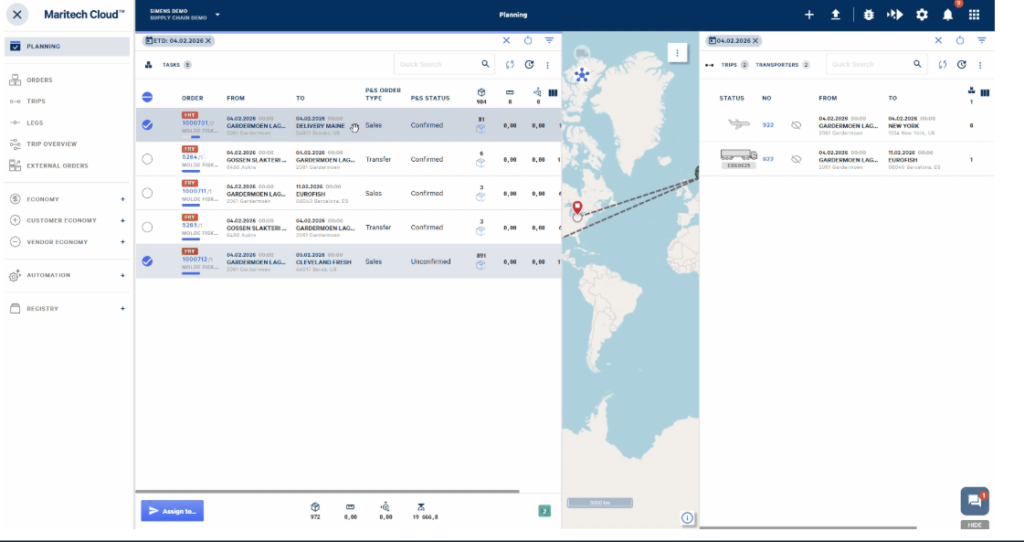
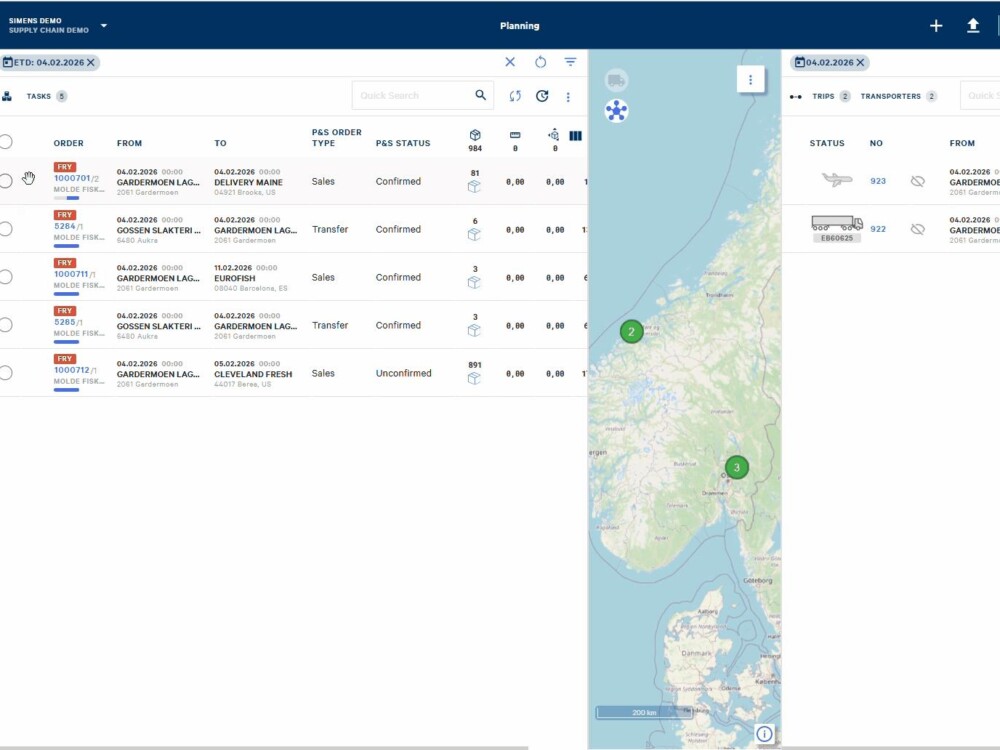
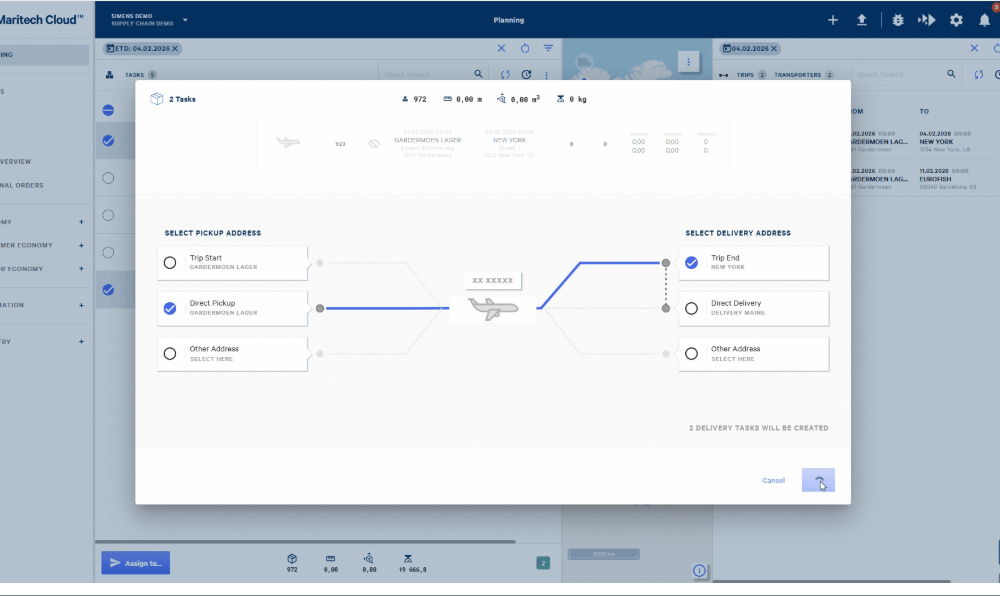
Want to see how the core functionalities in Maritech look like, and works? Have a look at our free digital demos: here for seafood solutions, and here for our logistics solutions.

FDA legal requirements – FSMA Final Rule on Requirements for Additional Traceability Records

Traceability laws and standards in the USA – what level do you need?

Several traceabilty changes have come into effect in the United States recently that have caused some confusion for suppliers of seafood as to what is needed to meet traceability regulations and also what is required for different aspects of the supply chain. This article outlines the specifications and differences between the various traceability schemes – both legal and market driven.

FSMA Final Rule on Requirements for Additional Traceability Records

The FDA (Food and Drug Administration) is the department in the US government responsible for food safety. The FDA’s new traceability rule – FSMA (Food Safety Modernization Act) Final Rule on Requirements for Additional Traceability Records for Food identified on the Food Traceability List (FTL) came into effect in November/2022 but will come under final enforcement on January 20. 2026. The ruling applies to all companies, including foreign entities, who manufacture, process, pack, or hold foods included on the Food Traceability List (FTL) within the United States. Main highlights of the new rule for seafood producers and suppliers include:

  • The Food Traceability List (FTL) has been expanded to include all finfish (with the exception of catfish), crustaceans, molluscan shellfish, and bivalves, in both fresh and frozen forms.
  • The Food Traceability Rule requires companies to maintain and provide to their supply chain partners specific information (key data elements or KDEs) for each physical movement or transformation in the food’s supply chain (called Critical Tracking Events or CTEs). Most specifically, the new rules require the establishment of a Traceability Lot Code from a first receiver of wild caught fish or a first harvester/packing plant of farmed fish.
  • Once a traceability lot code has been assigned, it can only be changed when the food is transformed (processed into a different item or repacked) and a link to the prior lot code must be preserved by the processor. The intention of the traceability lot is to link incoming with outgoing product within a firm and from one point in the supply chain to the next.
  • In the case of an audit or a recall, a company must be able to provide an electronic sortable spreadsheet containing relevant lot traceability information to the FDA within 24 hours of a request (or within some reasonable time to which the FDA has agreed) when necessary to assist the FDA during an outbreak, recall, or other threat to public health.
FSMA Purchase & Sales is fully compliant with FDA

Maritech Purchase & Sales is fully compliant with the new FDA rules and there are provisions within the software for recording and transmitting the required information and, in the case of a recall, generating a spreadsheet for the needed lot information via an Analytics traceability report.

At a high level, Maritech Purchase & Sales allows you to assign a lot no. when fish is first received and ensures the lot number is preserved and cannot be changed unless the fish is processed/transformed into a new item. The origin lot(s) that went into the production of the new item is preserved in the allocation of the raw material to the new production record or in the case of a repack, the allocation to the repack.

For first receivers of wild fish, Purchase & Sales allows detailed recording of vessel and catch details through landing notes (in Norway) or Fishing Trips (outside of Norway). For first receivers of farmed fish, when an item is stocked, if from an aquaculture harvest, both the farmer and the cage no.or pen no. can be included in the record. In addition, in Norway, a locality from Barents watch can be linked to the stocking record which gives precise location and history information related to the site, cage units, etc. Finally, an origin fish CV can be linked to the stocking record which can provide, in addition to fish feeding and medication history, etc. precise unit information for harvested fish.

The FDA ruling refers to a traceability lot code source reference. This is detailed information about the vessel and catch in the case of wild caught fish or the farm harvest location (fish unit location, etc.).

While detailed information (catch area, vessel or harvest unit, etc.) must be maintained by the first receiver of the fish – who also issues the origin lot that follows the fish – all of these details do not need to be sent to every subsequent receiver of the fish. Instead, what can be sent, along with the traceability lot code, is a traceability lot code source reference. This allows the FDA to know the business name, phone number and address of the provider of the traceability lot code. It can be in the form of an FDA food facility registration number or a web address that provides the company information.

GDST (Global Dialogue on Seafood Traceability) Standard

GDST is a non-profit foundation that was established in 2017 as a partnership between the World Wildlife Fund (WWF) and the Institute of Food Technologists (IFT). It developed a standard by which seafood supply chain partners can use a common set of data elements that need to be documented and transmitted electronically between GDST compliant trading partners and provides the technical formats for how the data elements can be transmitted. The GDST is not a legal requirement. However, if you are partnered with some grocery retailers – Wegmans, Whole Foods, or Sainsbury’s for example – then you may be required to use the GDST standard when providing shipments of fish to these grocery companies.

In addition, if you wish to market yourself as a GDST compliant provider, then you must partner with GDST. GDST Partnerships have four tiers: each with different fees and benefits. The emphasis of the GDST goes beyond the strict legal traceability standards required by the FDA ruling and has an additional focus on proving that your products are sustainably caught/grown and ethically produced with regards to environmental certifications and human welfare policies. In addition, to use the GDST standard to comply with FDA legal requirements, you have to use an extended standard from GDST as they do not explicitly capture, for example, the first receiver information needed by the FDA.

Much of this additional detail can also be recorded in Purchase & Sales. For example, you can record tag certifications such as MSC or Global GAP to accompany the fish from stocking to sale. However, the specific interface needed between the GDST retailer and Maritech Purchase & Sales is an additional external interface and not included in the base software product. In addition, some elements such as participation in a certifying body, such as Global GAP, are outside of the Maritech software system. While these details can be recorded, it is up to the seafood company to register and comply with the certification body itself.

Details of what is required by a GDST partnership can be found here:

https://thegdst.org/

Trace Register

Trace Register (TR5) is a private company (established in 2005) that provides traceability tracking for seafood suppliers. It is not an ERP and only gathers the traceability information from seafood producers and suppliers that is needed by retailers, usually captured in the seafood supplier’s ERP system. It provides, in addition, an interface for integrated and automated Seafood Import Monitoring Program (SIMP) filings and other regulatory bodies. Like GDST, there are some grocery retailers – Whole Foods, for example – that require seafood suppliers to use Trace Register. Trace Register is also a partner with GDST but not all retailers who require Trace Register records require GDST standards. These two organizations are similar but do not use precisely the same interface.

Details of what Trace Register offers can be found here:

https://www.traceregister.com/

Maritech Purchase & Sales does gather the information that needs to be input into Trace Register. However, an explicit integration between the two systems is not part of the base Maritech Cloud product and needs to be developed as an external integration depending upon your company’s specific requirements.

Is your ERP system costing you more than you think?

With more than 500 companies on our customer list, we’ve observed a clear pattern of frustration around generic ERP solutions.

Is this your company?

Many companies that opted for generic ERP systems 10-15 years ago now find these solutions unable to handle the complexities of modern seafood processes.

Rather than switching systems, many companies try to adjust their existing ERP to increase efficiency. But these adjustments often come with significant costs, as even minor changes can quickly become expensive.

Generic ERP systems, designed as “one-size-fits-all,” don’t always prioritize the specific needs of seafood businesses.

Sound familiar?

If this resonates with you, here are three tips that can help:

1. Consider customized solutions:

A generic ERP might not be the right fit for the intricate demands of seafood processing. A customized solution can offer the exact functionality your business requires, such as enhanced traceability and quality control features.

2. Check integration capabilities:

Ensure your ERP system integrates seamlessly with the other tools you use. Strong integrations can improve workflow efficiency and reduce the need for costly manual adjustments.

3. Choose a scalable system:

Invest in software that grows with your business. A scalable ERP allows you to expand and adapt as your business evolves, minimizing future disruptions.


Wanted a scalable system

One of our customers, The Kingfish Company, experienced these challenges firsthand.They struggled with the limitations of their outdated ERP system until they transitioned to a customized solution tailored to their specific operational needs. This move helped them streamline their processes, reduce costs, and improve overall efficiency.

“We are scaling our business and needed new tools that enable us to reach our goals. Now, we have optimized our workflow, as the Maritech software is fully integrated and absorbs the side-stream of information.“

Ready to make a change?

Don’t let outdated ERP systems slow down your business. Check out our free digital demos to see how a customized, scalable solution can better meet your needs and future-proof your seafood processes.

How Digitalization Can Solve Recruitment Challenges in the UK Seafood Industry

Is your UK seafood company ready for the next generation workforce?

The future of your seafood business depends on your ability to grow and evolve — and that starts with building a strong team. Attracting top talent is essential, and this is where your employer branding strategy becomes a key factor in staying competitive.

According to Forbes, millennials are set to make up 75% of the workforce by 2025, with Gen Z following closely behind. These two generations are reshaping the workplace, bringing new expectations and demands. For companies in the UK seafood industry, the need to adapt is more urgent than ever.

The UK Seafood Industry is currently facing recruitment challenges across the fisheries and seafood processing sectors, leading to intensified competition for talent. To overcome these obstacles, it’s crucial to understand what motivates the emerging workforce.

The oldest members of Gen Z are now 26 years old, and both millennials and Gen Z have grown up in a digital-first world. They expect work processes to be streamlined, digitized, and automated wherever possible.

For seafood companies across the world, and specifically in the UK, this means that investing in technology is no longer optional — it’s a necessity. To effectively attract and engage this tech-savvy generation, your employer branding strategy must reflect your commitment to innovation and modern work environments.

So where can Maritech help?

We provide cutting-edge seafood software solutions designed to automate and optimize every stage of the supply chain — from production to processing, packing, trading, and logistics. Our technology empowers your company with greater transparency, control, and efficiency, ensuring you stay competitive in the rapidly evolving seafood industry.

With the millennial generation soon to dominate the workforce and Gen Z close behind, staying ahead means positioning your company as an innovative and attractive employer. By embracing digital solutions, your seafood business can appeal to the expectations of the next generation and overcome the recruitment challenges facing the UK seafood industry.

Investing in technology isn’t just about operational efficiency — it’s about strengthening your employer branding strategy to secure the talent you need to thrive in the future.

How to Digitalize the Canadian and US seafood industry

In the dynamic landscape of the Canadian and US seafood industry, staying ahead requires strategic tools tailored to your unique challenges.

Maritech has more than 40 years of experience in the seafood industry, and have been supporting more than 300 seafood companies with their digital transformation. Our seafood ERP software is designed to empower your business in all your seafood operations, whether its seafood distribution, processing, wholesales, logistics – you name it, we know it.


The backbone of efficient seafood management

In the ever moving world of seafood, streamlined operations is the key to success. Our seafood ERP solution, Maritech Cloud, offer a comprehensive suite of tools, providing real-time insights into your business processes. From production and inventory management to traceability and compliance, our seafood ERP software is your ally in achieving operational excellence.

Seafood distribution

In an era where resources are limited, efficient seafood distribution has become increasingly crucial. Our specialized seafood distribution software is tailored to meet the specific demands of North America’s seafood supply chain. With features such as order management, route optimization, and real-time tracking, our software ensures that your products reach their destination fresh and on time.

Seafood processing

Experience a paradigm shift in seafood processing with Maritech Cloud. Our seafood processing software is designed to enhance every stage of the processing journey, from quality control and yield optimization to compliance and reporting. Elevate your processing capabilities and deliver top-notch products to your customers.

Comprehensive seafood software solutions

Maritech goes beyond conventional ERP solutions. Our seafood ERP is an all-encompassing suite, covering the intricacies of the seafood industry. Whether you’re a small-scale distributor or a large processing plant, our scalable seafood software adapts to your needs, fostering growth and efficiency. Whether you need the full solution or just parts of it, we got you – and whenever you are ready to expand or get more modules, you can. Maritech is the only one-stop cloud software for all your needs in the seafood industry.

Contact us here if you want to explore how we can support your seafood business!

Sign up to our newsletter!

Seafood Traceability 2.0 

Navigating the Seafood Traceability Landscape

Meeting modern demands with advanced solutions

In today’s market, seafood traceability goes beyond meeting basic legal requirements.

Consumers want to know that the seafood they choose is of top quality and has been responsibly produced. For you, heightened seafood traceability awareness means that more data must be collected and verified, including an ever expanding and more transparent set of checks.

Meeting and exceeding the seafood traceability challenge

Seafood products are subject to extensive regulatory programs – the Seafood Hazard Analysis Critical Control Point (HACCP), the National Shellfish Sanitation Program (NSSP), the Seafood Import Monitoring Program (SIMP), FDA tracking regulations, and more. Sorting out how all these rules align and how they can be incorporated into your existing seafood software can be confusing. Especially for small producers or traders, the burden can seem onerous and expensive.

As consumers become ever more environmentally conscious, it is clear that just meeting the minimum legal standards for fish traceability will not be enough for seafood companies to be successful in the coming years. You must be able to measure and report on how you are meeting not just the legal mandates, but also sustainability standards, set both now and as goals for the future.

Customer case Silver Seafood - Maritech

Future proofing seafood traceability

This means that companies must have a seafood traceability system that tracks more than just basic one up one down lot traceability, but also keeps track of hard-earned certifications (such as MSC and Global G.A.P) that follow along with the fish records and provide assurance that the fish meets the most rigorous standards of being responsibly and ethically raised or caught.  

Even more stringent measures, such as the newly implemented MSC Labour Eligibility Requirements (May, 2023) that will audit against illegal and forced labour, are also becoming part of the mandatory traceability landscape. Over the next decade, it will be common for seafood traceability to include verification of tracking data acquired by satellites, used to monitor the location and movement of commercial fishing vessels to combat illegal, unreported and unregulated fishing (IUU fishing). For small producers, keeping abreast of the newest traceability requirements and providing the necessary verification can be an ever-steeper challenge.  

Maritech Quality Tracking - digital checklists linked to keys in your business system

Traceability that is trustworthy

In Maritech, traceability has been in our backbone since the 70’s, and is at the core of our position as the global leader in seafood tech. For decades, we have been in the forefront developing cost-effective tools to manage digital seafood traceability and supply-chain collaboration for seafood companies around the world. 

Landing Note information, which records the verified catch area, fishing trip dates, origin lots, and more has been an integral part of Maritech seafood software systems from the very beginning. Our uniqueness is that we cover the seafood-related processes through all of the value chain, from sea to table – with full traceability, documentation, and control. From landing or aquaculture, through production, processing, packing/labelling, sales, claims, and logistics.

Tools for tracking of MSC, Global Gap, and other major certifications are built into our seafood solutions. This means that even very small producers can comply easily and affordably with an implementation that takes weeks, and not months and years.


By creating simple and powerful cloud solutions that manage all of this information easily, integrated with your normal business transactions, we will, together, steadily and surely remove the barriers to a safer and more transparent seafood supply chain.  

And by investing in advanced seafood traceability software and maintaining rigorous standards, your seafood company will not only meet current demands but also position yourself for long-term success in a competitive and conscientious market.

The First Eye at Sea

Útgerðarfélag Reykjavíkur is the first company that have started using Maritech Eye™ onboard fishing vessels.

In December, Icelandic Útgerðarfélag Reykjavíkur installed the first of their two Maritech Eye units.

Their purpose is to automate the recognition and documentation of species in combination with size and other parameters related to various characteristics of whitefish catch.

The information will also be sent to the fisheries authorities in Iceland, who will use the data for research and estimation of stock size to optimize Icelandic quotas. Fiskistofa, The Icelandic Directorate of Fisheries, and Hafrannsóknarstofnun Íslands, the Icelandic Marine and Freshwater Research Institute, express that this project is very exciting to follow up on and that they will collaborate closely with Útgerðarfélag Reykjavíkur.

Automated catch registration

“We chose Maritech Eye™ because we see the possibility to solve the task of registering all our catch and believe it will greatly help optimizing our operations and give important research data to fishing authorities,” says Runólfur V Guðmundsson, CEO Útgerðarfélag Reykjavíkur.

“Útgerðarfélag Reykjavíkur is a leading Icelandic fishing company. They always try to use the latest technology on their vessels and work closely with all stakeholders in the industry. True pioneers,” says Konráð Hatlemark Olavsson, General Manager Maritech Iceland.

“As the industry is changing and the boats are getting bigger and more advanced, we see this as a natural part of the development – automated sorting, quality control, data collection, and documentation.”

Útgerðarfélag Reykjavíkur chose Maritech Eye for automated sorting onboard fishing vessels

Blood, Gaping, Fat, Nematodes ++

Automated and objective quality assessment, documentation and sorting, allows you to use your resources in a more cost-efficient way and improve your margins. With our standardized setups for salmon or whitefish, you can easily get started and get full return on your investment within just a few months. Ask us for an estimate.

Maritech Eye™ detects and documents blood spots, gaping (whitefish and salmon) melanin, salmofan, fat (salmon fillets), nematodes, and species (white fish fillets + round fish). As the scanning gives you objective documentation of the fish quality – in industrial speed, with a unique ID for each fish – you can easily provide this verification and traceability to your customers either they are wholesalers, supermarket chains or smaller buyers. If you buy fish from other, you will be able to verify that you pay for the quality you actually get.

Maximizing profit and quality

“This first vessel-based project is a milestone in several ways,” says Per Alfred Holte, VP Technical Solutions at Maritech. “Especially since the value creation at the fishing grounds is almost impossible to compensate for at a later stage in the seafood value chain. An increasing share of the quotas are caught by large vessels, it is crucial to ensure optimal operations at sea, data collection, and resource utilization.

With automated tools such as Maritech Eye™, both the industry and authorities ensure objective documentation and data collection, with considerably higher precision and efficiency compared to what you can get through a manual collection of random samples or inspection of complete catch volumes.”

Curious to see how it works?

Welcome to Maritech,
Brim and Hnyfill! 

In early June, The Icelandic Fisheries Exhibition (IceFish) finally opened its doors to the public again. 

It was great to be back! And a perfect occasion to sign our two new customers, Brim Seafood and Hnyfill.

Brim testing Maritech Eye

Brim Seafood is one of the largest seafood companies in Iceland, specializing in wild-caught Atlantic Cod, Deep Sea and Golden Redfish, Greenland Halibut, Saithe, Mackerel, and Haddock. The initial phase of our new Brim partnership is a Maritech Eye™ test project, where the main goal is to increase the efficiency of Brim´s production and processing.

“We have been in dialogue with Brim for a while now, and they have been very positive right from the beginning. They are a leader in innovation and responsible fishing and have positioned themselves as an influencer in the Icelandic seafood industry,” says Konrad Olavsson, Maritech Iceland.

A natural next step

“Exploring the capabilities of Maritech Eye™ is a natural next step on this path, as they are now the first Icelandic company to start testing hyperspectral imaging for objective quality documentation and species sorting,” Olavsson continues.

“As Maritech Eye™ is the only solution of its kind in the world, that can actually document the inside of whole, round whitefish, this gives our customers  a new competitive advantage in the global market – in addition to the efficiency gains, reduced waste, and other benefits such as the reduced amount of repetitive, manual tasks.”

Image: Konrad Olavsson, Maritech Iceland, and Gisli Kristjansson, Brim Seafood


Brim Seafood testing Maritech Eye

Hnyfill + Maritech

A new Maritech Cloud customer was also signed at Icefish – Hnyfill will now be the first Icelandic company using Maritech Purchase & Sales for all their seafood trading processes.  Hnyfill is a fish processor located in Akureyri in north Iceland. They have been operating for nearly 30 years and are moving into further digitalization of their processes together with Maritech.

“I’m not sure if it’s coincidence or fate that the meaning behind the word Hnyfill is ‘to pioneer,’ which is exactly what our relationship with them will do,” Olavsson smiles.

“We are looking forward to getting them up and running and aim to build a strong partnership for the future.”

Connected in Boston

The connection between Maritech and Hnyfill was established at Seafood Processing North America in Boston in March earlier this year.

“At the show we met the owners of Hnyfill and other processing and sales offices in Iceland. They showed us great interest since they have the need to digitalize their companies – preferably with the same IT partner to be able to cooperate and transfer information with more ease. Choosing Maritech as their trading software partner might just be the first step in our cooperation.”

Image: Konrad og Einar Örn Aðalsteinsson, Hnyfill

Hnýfill chose seafood trading software Maritech Purchase & Sales

Are you curious?

Let us know! Just fill in this form, and we will get back to you as soon as possible.